

Rating: R | Runtime: 104 minutes
Release Date: June 2nd, 2023 (USA)
Studio: Gravitas Ventures
Director(s): Abel Ferrara
Writer(s): Maurizio Braucci & Abel Ferrara
Blessed is the man who endures the trial.
While an effectively confrontational piece of political cinema, I must admit that I have zero clue as to what Abel Ferrara is doing with his latest film Padre Pio. He and co-writer Maurizio Braucci are telling the tale of a small Italian village shortly after the end of WWI wherein the people have awoken to their own exploitation. This is a problem for those in control of both the land and the military since the country is about to hold its first “free and fair” election.
The current mayor (Brando Pacitto’s Renato) seeks reelection with the strong-arming help of Gerardo, a returning general (Marco Leonardi), against a growing socialist party consisting of his laborers. Their story’s progression is straightforward with abuses of power, election interference, and intimidation. And yet it’s not the main narrative thrust. Not when you consider the title.
Because while all this is going on, Pio (Shia LaBeouf) has begun his ministry under a priest who’s sympathetic to the village’s wealthy class. Churches love money, after all. The assumption is therefore that this new arrival might stand-up and side with the people since Pio eventually becomes a Saint, adored by many Catholics. I, being a non-practicing Catholic bordering on Agnostic, however, know nothing of why this is.
So, I deduced that he’d have an impact in this election struggle. That this would be some sort of origin story for his veneration—a hypothesis seemingly bolstered by his own suffering at the hands of ghosts haunting him with guilt and temptation. But alas I was incorrect. Pio’s parallel journey on-screen barely touches that of the political revolutionaries. He simply searches for God through tears while they fight for freedom.
Where then is the connection? I see none. Hence my confusion. It’s as though Ferrara has shoved two disparate films together wherein only those who are already keenly aware of the history of both can easily comprehend the overlap. To me one merely distracts from the other.
We cut from Pio to Luigi (Vincenzo Crea) and Giovanni (Cristina Chiriac) with little rhyme or reason. Even the climax feels disjointed considering anyone with a brain can guess the election won’t actually be fair (Italy is a fascist state when WWII rolls around) while knowing Pio will probably return to God considering who he becomes. The blood of innocents therefore gets juxtaposed with Pio’s relief. Why? What is Ferrara saying? That some believers find salvation despite the rampant corruption surrounding them?
It’s probably more in line with calling out the hypocrisy of the words Pio speaks to a man who lost both his sons to the war. Pio (LaBeouf is quite good, perhaps using the role to confront his own personal demons) tells an anecdote about embroidery and how we’re often looking at the knots of a canvas from below while it’s still being sewn.
Only after seeing the front can we understand the beauty born from that chaos and pain. He tells this man to keep praying. To live so he may see God’s plan. It’s the hollowest of non-answers that Catholics eat up every Sunday—the empty belief in more that demands we ignore what we see with our own eyes. So, the film is Pio recognizing God’s plan despite the nightmare unfolding? Maybe. Is it therefore a criticism of the man rather than a memorial? I wouldn’t be so confused if I knew. Nor would I have almost nodded off every ten minutes.
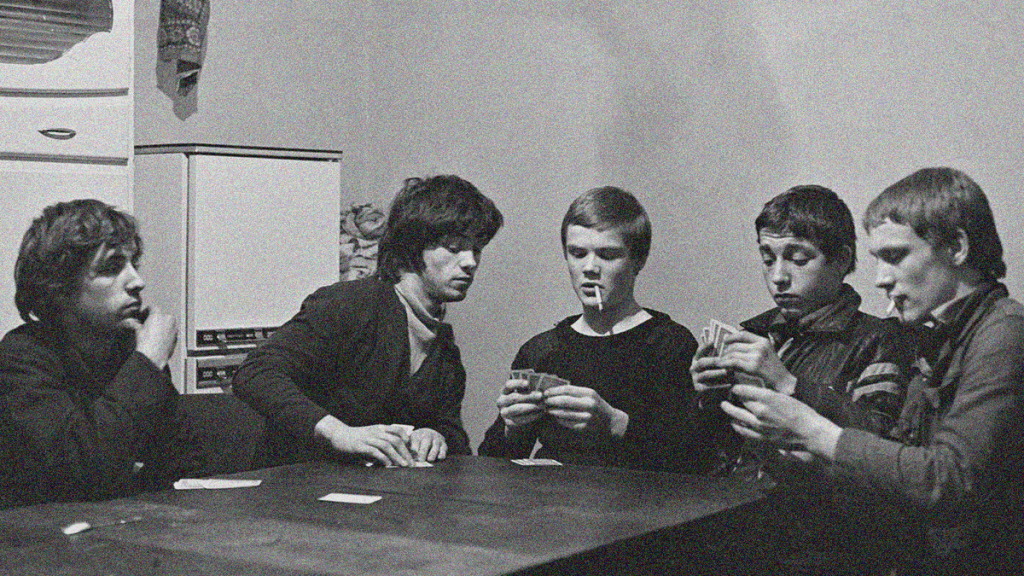
Shia LaBeouf in PADRE PIO; courtesy of Gravitas Ventures.


 jaredmobarak.com
Leave a comment