
Rating: NR | Runtime: 93 minutes
Release Date: November 17th, 2022 (Switzerland) / May 5th, 2023 (USA)
Studio: Filmcoopi Zürich / Kimstim Films
Director(s): Cyril Schäublin
Writer(s): Cyril Schäublin and Emanuel Schäublin
I worked slowly on purpose.
First things first: Cyril Schäublin’s Unrest is a gorgeous film. About half the runtime consists of static setups from a distance with characters conversing in the corners of the frame or moving in and out with expert blocking.
Much of what remains is a normal view of those same characters engaging in their day to activities (whether photographers taking and selling portraits for 20 centimes, men and women adorned with loupes to meticulously assemble Swiss pocket watches, or supervisors timing their progress and managers looking for matches to light their cigarettes) or close-up documentation of the technology and systems being used. The production design is impeccable, the acting naturalistic in its often-emotionless silences as the wealthy wryly smile with confusion and the workers glare with frustrated intent.
The closest thing to a story is that of cartographer Pyotr Kropotkin (Alexei Evstratov) making his way to Switzerland to embed himself in its blossoming anarchist movement circa 1870 and draw a map beholden to their localizations rather than the desires of strong-arming municipalities. Everything opens with a quartet of women remembering him—an introduction to the time and his motivations before transporting us to the factory town where he’s found himself.
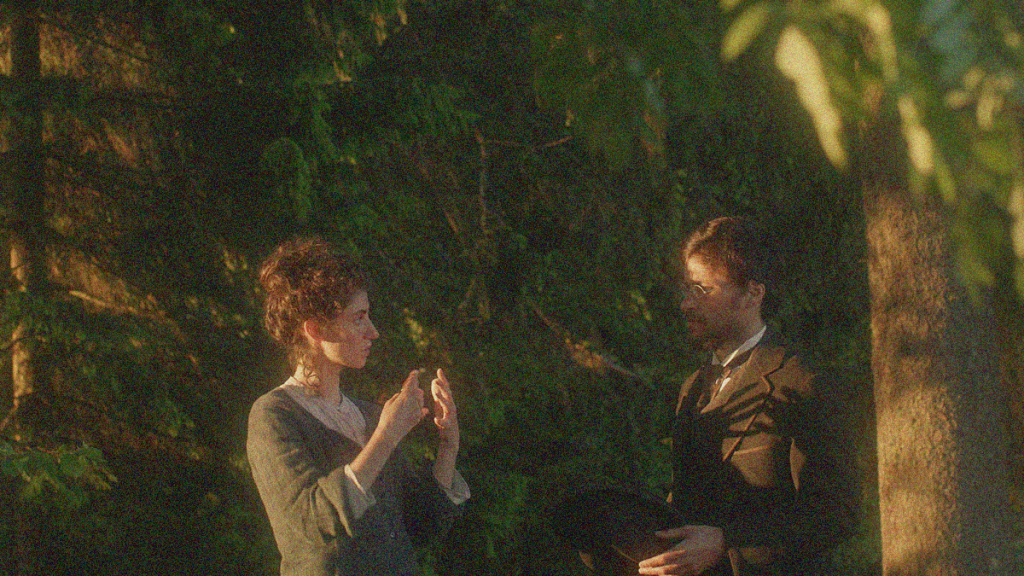
That’s when he meets Josephine Gräbli (Clara Gostynski), one of many women putting the so-called “unrest wheels” together so another area of the business can attach them to the rest of the clocks. She’s a full-blown anarchist, telling co-workers to slow down and stop adhering to their employer’s high demands. The pair will eventually journey out into the woods together, but Pyotr and Josephine are really just two of the many faces we meet on-screen.
And that’s fine since the film works best as a period-specific vibe. Anarchists covertly slipping propaganda into the pockets of the aristocracy in the form of matchbooks. The genial but powerless security force asking people to not walk in front of the new photography being taken of the factory (even though each shot lasts only twenty seconds). There’s an election. Tax evaders. Lotteries. Talk of a battle reenactment and how one’s need to relive such violence at the expense of taxpayer dollars shows more weakness than strength. Telegraph exchanges.
It’s a moment of time where new technology becomes prevalent both to get employers thinking about greater profits and employees thinking about higher wages and discretionary income. Because these new tools (camera, telegraph, etc.) should be about leveling the playing field, not widening the chasm. But since these same political issues remain at play today, capitalistic greed continues to prevail.
Clara Gostynski and Alexei Evstratov in UNREST; courtesy of KimStim.



 jaredmobarak.com
Leave a comment