
Rating: NR | Runtime: 101 minutes
Release Date: April 11th, 2023 (USA)
Studio: Magnolia Pictures / HBO Max
Director(s): Lisa Cortes
He created the rock and roll icon.
The way things go throughout Lisa Cortes’ documentary Little Richard: I Am Everything, I’m surprised the title wasn’t The God of Rock ‘N’ Roll. Because while Little Richard was never shy to call himself the “King” and demand recognition for ushering in a major sea change for music, the talking heads giving his life and legacy context never waver in saying he might have been selling himself short.
As Richard would say, though, “I’m not conceited.” He would never call himself a God both because it would mean his ego had surpassed his talent and because it would be blasphemy as a God-fearing man who perpetually vacillated between his true self as a queer man and the self he was brought up to believe he must be for salvation. Calling himself the “King of Rock” was simply the truth.
And as many of the interviewees state, being able to speak one’s own truth to power isn’t something we should admonish. It’s something we should aspire to do ourselves. Especially as a Black gay man in 1950s America who was overjoyed that so many artists found worth in his music to be inspired and springboard off.
To have that sense of appreciation and love for the art form doesn’t, however, mean that he didn’t care about the financial and cultural ramifications of white musicians making more money off his songs than him. Richard was simply able to recognize the beauty of music and its influence in artistic awakenings outside the industry’s machine. Not that he wasn’t always fighting similar battles with religion and sin. Guilt often got the best of him.
That truth is where the film excels because the music is iconic. As is his image on-stage. What I didn’t fully understand was just how all-encompassing his numerous shifts into gospel and the ministry were. Whereas I assumed these eras were predicated on the music style, they were actually wholesale transformations to the point of publicly denouncing homosexuality. Publicly denouncing his identity.
That was a shock to learn and yet completely understandable due to the historical context provided by those who knew him best and those who’ve studied his place in both the realms of music and sexuality. To have this outlet to let his genius live only to then believe it was killing the people he loved is a devastating thing.
As a collection of new interviews (with scholars, friends, and musicians alike) and archival footage, Cortes isn’t reinventing the wheel where structure or aesthetic are concerned. But she does a phenomenal job weaving everything together for optimal coherence and emotional impact. And once you start to learn of Richard’s internal struggles, you’ll understand just how difficult an exercise doing so proves.
Because the ebbs and flows are constant. The rebirths and retreats cyclical to the point where you see the power of art and music as an equal to religion when it comes to a blueprint for culture and life. It’s no wonder then that they are so often antithetical to each other with Richard at times even burning his own records as the Devil’s work. It only bolsters the argument that he did influence everything. He was the one breaking barriers that even he sometimes thought shouldn’t be broken.

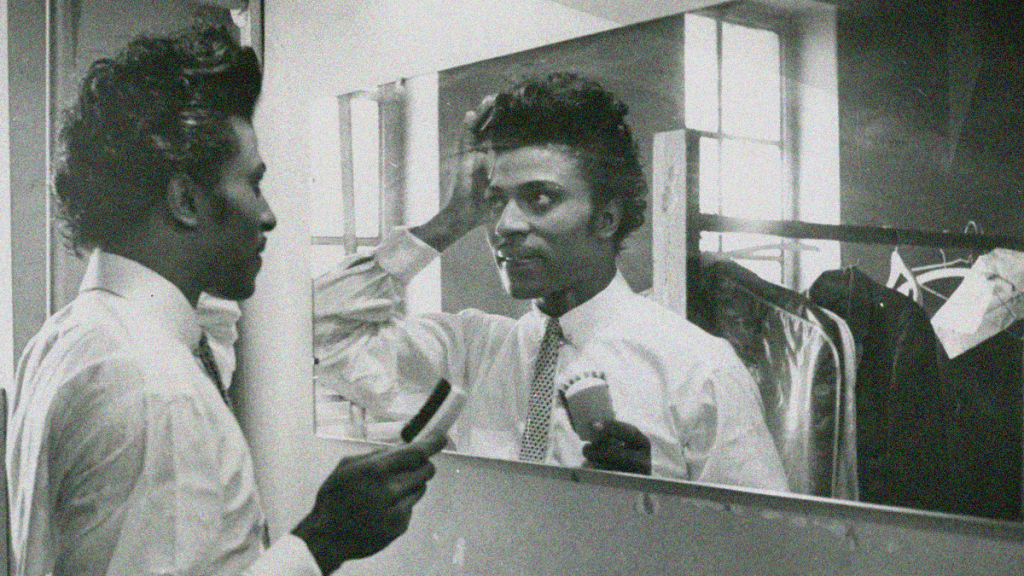
Little Richard in LITTLE RICHARD: I AM EVERYTHING, a Magnolia Pictures release. Photo courtesy of Magnolia Pictures.


 jaredmobarak.com
Leave a comment