
Rating: R | Runtime: 119 minutes
Release Date: April 21st, 2023 (USA)
Studio: Vertical Entertainment
Director(s): Damián Szifron
Writer(s): Damián Szifron & Jonathan Wakeham
Some people just can’t live in the shadows.
It’s a throwaway line spoken by Eleanor Falco (Shailene Woodley) while trying to explain to her boss (Ben Mendelsohn’s Lammark) why his superiors are less afraid of him not capturing the mass murderer who mowed down twenty-nine people on New Year’s Eve than they are of him succeeding. Because they want the credit.
The Bureau. The mayor. Anyone who can profit politically with the social capital of having their name attached to stopping a madman and bringing peace back to Baltimore’s streets. She knows it all too well because she has been overshadowed, sabotaged, and ignored by people like that her entire life. She has been abused and silenced to the point of suicide when all she’s ever wanted was a place of her own. A voice to do right.
As Damián Szifron (of the brilliant Oscar-nominated Wild Tales) and co-writer Jonathan Wakeham soon reveal through the behind-the-scenes machinations of a city-wide manhunt that makes up To Catch a Killer, “right” has unfortunately lost all meaning. Lammark wants nothing more than to pretend it hasn’t, playing the game in a way that keeps him afloat long enough to do the job without crossing the self-centered and ambitious folk who could fire him without blinking an eye.
He’s an optimist believing that he can recruit loyalists (Eleanor’s beat cop and Jovan Adepo’s Special Agent Mackenzie) to work outside the system while maintaining his spot within it. He thinks his track record and ability is enough to make him irreplaceable. That people in power still care about society’s well-being on top of their own.
I don’t think the film is nihilistic in saying that’s no longer true. I think it’s simply being honest. And the mayor’s right-hand man makes a telling joke to confirm as much, riffing on the notion that politicians shouldn’t ever want to be the mayor from Jaws by stating the real lesson from those movies is that Murray Hamilton is still the mayor in Jaws II. Everything we do is selfish. Everything is for personal gain.
While Lammark might be trying to insulate the dispersal of information from this case to minimize politically motivated screw-ups (one of which occurs almost immediately), it does still work to his advantage as far as credit is concerned too. So does his desire to go it alone with Eleanor during a climactic moment that demands they call for back-up. Lammark’s intentions might be pure, but his actions still fall under the label of self-preservation.
The same can be said for the killer (it’s not a spoiler to say Ralph Ineson since the film is about psychology and sociology rather than cheap subterfuge). Here’s a man who just wants to be left alone, but he’s forced by capitalism and technology to socialize with those who reject him in order to stay alive. That doesn’t therefore make Eleanor’s line about no one wanting to live in the shadows false, though. It actually confirms it by showing how the powerful’s refusal to accept blame or refuse credit has made it so no one can.
The moment she wants to come out of the darkness and move forward, they blacklist her with a psych evaluation. The moment Ineson exits in search of food and clothing, they turn their noses and label him a homeless blight. Society creates pariahs in its pursuit of prosperity and then judges them as if it wasn’t the reason they’ve been tossed aside in the first place.
It’s an intriguing and effective line of thinking that Szifron and Wakeham do their best to let shine through the otherwise by-the-numbers police procedural they have created. The juxtaposition isn’t perfect, but their ability to let their characters be flawed and complex does allow our normal preconceptions born from Hollywood copaganda to get pushed aside.
Having Lammark pluck Eleanor out of obscurity because she can “understand a psychopath’s motivations” as someone with similar mistrust and hate for the failing infrastructure surrounding them isn’t a cute mirror or reductive play for “profiling.” It’s the purpose of the entire film. That doesn’t mean it condones what Ineson’s character has done. It simply reminds us that such choices aren’t made in a vacuum. Actions have consequences. A world that’s normalized violence into news cycle entertainment reaps what it sows.
And maybe this isn’t the most nuanced forum to get that point across, but neither is a dinner table conversation that’s more about asserting a position than it is about changing minds (like we see at Lammark’s home with Eleanor as guest). I would argue, however, that it’s the correct one. Because whether people come to watch To Catch a Killer as a generic crime thriller—the promise of which it effectively fulfills thanks to Szifron’s undeniably strong direction and top-notch performances from Woodley, Ineson, and Mendelsohn—or not, they will be introduced to this more pressing matter by doing so.
Whose safety is protected by our government and laws, after all? The rich. The powerful. The sheep sold a bill of goods that masks their own expendability. The rest are forgotten and left to die. Because the mayor in Jaws will never actually have blood on his hands no matter what people think. He’ll blame his subordinates, the community will say he “did his best”, and he’ll always be back next term.
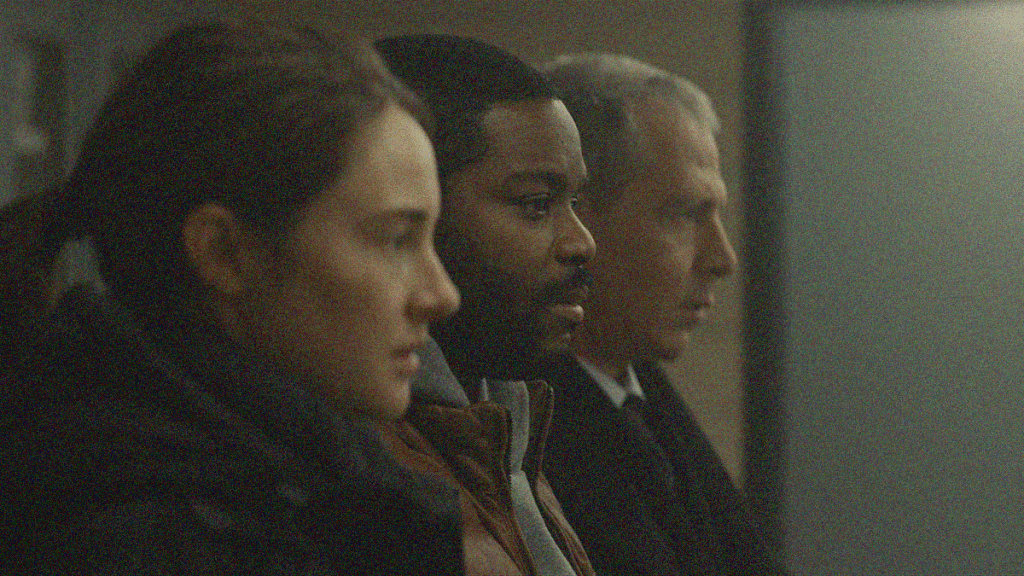
Shailene Woodley, Jovan Adepo, and Ben Mendelsohn in TO CATCH A KILLER; courtesy of Vertical.



 jaredmobarak.com
Leave a comment