
Rating: PG-13 | Runtime: 93 minutes
Release Date: April 14th, 2023 (USA)
Studio: National Geographic Documentary Films / Picturehouse
Director(s): Jimmy Chin & Elizabeth Chai Vasarhelyi
He didn’t have billions or anything like that, but he had like one hundred and fifty million dollars to do this one thing.
It’s a crazy line of dialogue shoehorned in without fully grasping the context that one hundred and fifty million is a billion to the common person. When you’re dealing with a story populated by rich people and their friends, however, it’s easy to lose sight of that. It should therefore fall on directors Jimmy Chin and Elizabeth Chai Vasarhelyi to bridge the gap and directly acknowledge this conservationist dream is built on the back of billion-dollar capitalist engines.
You can’t just simply mention that Doug Tompkins started and sold The North Face before running his first wife’s fashion line Esprit while Yvon Chouinard created Patagonia as though these companies are boutique entities and not the providers/benefactors of promotional assistance by literally clothing everyone on-screen. Wild Life is trying to separate church and state by ignoring the connection, but doing so only makes it more prevalent.
Does this truth render the mission of the documentary moot? No. This is a well-compiled look into Doug and Kristine Tompkins’ quest to save Chilean rainforests at a time when people of their station (she’s a former CEO of Patagonia) generally help destroy them. With archival and home video footage paired alongside newly shot first-hand accounts from all parties except Doug (who tragically died in 2015), we really get a sense of the struggle they endured to shed themselves of that reality’s inherent preconception.
Because why should the Chilean government, military, or citizens believe these wealthy Americans didn’t have a hidden agenda? When has anyone in their position ever done the right thing without first securing a means of profiting off it for themselves? To watch this film is to realize that they truly were the exception to prove the rule.
Would I have liked a bit more in-depth analysis of the shift in philosophy besides Doug having an epiphany when on a nine-month mountain climbing vacation with his friends (afforded to him solely because he had money to burn)? You bet I would. But that’s not Chin and Vasarhelyi’s goal. That’s never been their goal in this medium. Meru, Free Solo, and The Rescue didn’t necessarily have that aspect waiting in the background, begging to be explored, though.
So, you do have to wonder if their involvement here (Chin is an acquaintance if not a friend who climbed mountains with Tompkins in the past) is precisely because they wouldn’t feel the need to conduct that exploration. They’ll allow euphemisms and corporate speak to gloss over what it takes to be as successful as these people were. They’ll let Doug’s nearest and dearest laugh away his checkered past with a shrug and blanket “He changed.”
And that’s fine since everything about Wild Life bills it as Kristine’s mission to finish what she and Doug started after his death. It’s about buckling down and making tough decisions that they admit caused some heavy professional arguments which in turn proved how strong their personal love for each other was. All that other stuff is pushed to the side in an attempt to render it exposition rather than the more interesting entry point into the story.
We’re meant to appreciate the Tompkins more because of what they’re willing to spend their fortune on since remembering that fortune exists and delving into what else it’s being spent on threatens to derail the good vibes being cultivated. My biggest takeaway from the whole is therefore optics. This is a feelgood story with some effectively heartfelt and honorable machinations, but it’s also a mostly superficial puff piece that can’t quite shake its public relations air of artifice.

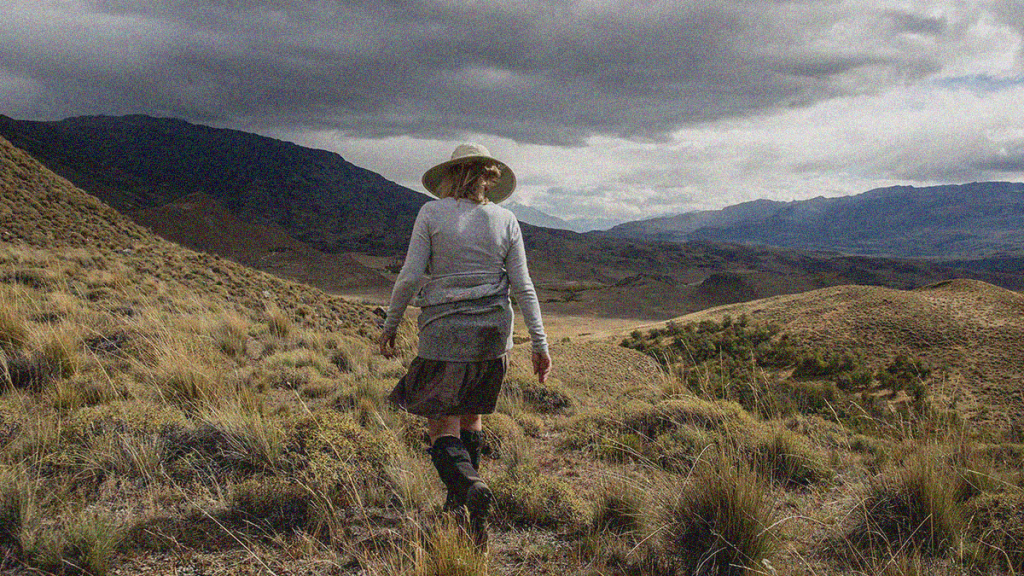
Kris Tompkins on a walk in Patagonia National Park from WILD LIFE; photo by Jimmy Chin.




 jaredmobarak.com
Leave a comment