
Rating: NR | Runtime: 92 minutes
Release Date: April 8th, 2022 (Lithuania) / April 7th, 2023 (USA)
Studio: Dekanalog
Director(s): Laurynas Bareisa
Writer(s): Laurynas Bareisa
I can see a lot of people getting very frustrated very fast with Laurynas Bareisa’s feature debut Pilgrims. We are brought into the action with zero context as Indre (Gabija Bargailaite) waits outside Paulius’ (Giedrius Kiela) parents’ home—where he’s recently moved back in. They haven’t seen each other for a while. She chides him about maybe having a girlfriend. He says his mother is sleeping when she asks to say “Hello” only for her to appear soon after to walk the dogs and spark a reunion without giving us anything more to chew on beyond hypotheses. Did these two used to go out and he’s embarrassed? Why are they coming back together now and what are they planning to do on this road trip? Their first destination does little to shed light.
If anything, that initial stop confuses things more being that they are trespassing on property where someone was apparently locked in a basement. They eventually begin roaming around a restaurant too—Indre silent as Paulius points out tables and corners where his matter-of-fact story about an altercation turning tragic took place. Was he there? Was he involved? Who is the victim to them? Bareisa is ratcheting up the suspense by allowing these two old friends to numbly walk through places that are haunted by the memory of someone’s ghost. But the more we hear and the longer they stay, it becomes clear that their numbness isn’t a product of indifference. It’s born from rage and pain and sorrow. These two are grieving someone they loved. They’re trying to understand the incomprehensible and, perhaps, seek some form of revenge or release.
Paulius is ready to kill someone. Indre is ready to feel. He can’t stop scowling when those complicit in what happened dare to express some level of privacy or empathy and she can’t stop smiling. It’s a truly authentic depiction of the awkwardness inherent to dark subject matter—especially since what they are doing isn’t necessarily “normal” when you consider a trial was conducted and the perpetrator found guilty. What does retracing these steps truly provide that the closure of that justice didn’t? Half of it is to hear the truth from the people who were there. Half of it is to acknowledge those steps so many years later in order to confirm that the deceased hasn’t been forgotten no matter how far Indre and Paulius have moved on. This is a film about the psychological scars of places, objects, and people.
And it doesn’t shy away from the complexity of those scars extending beyond just the victims’ loved ones. The perpetrator’s family has suffered loss too. That doesn’t mean you have to pity them or pretend their anguish is on par with our leads, but it does color their motivations when asked to relive what happened through force rather than choice. So, don’t expect the sort of catharsis Hollywood loves to put on-screen via guttural screams and acts of righteous violence. This is more about crying under a sheet on the floor or refusing to be comforted. It’s about losing your head and damaging property only to eventually apologize. I’m talking about mundane melancholy, poked and prodded by a mixture of fear and indignation where nothing tangible results besides a long-awaited exhale of acceptance.
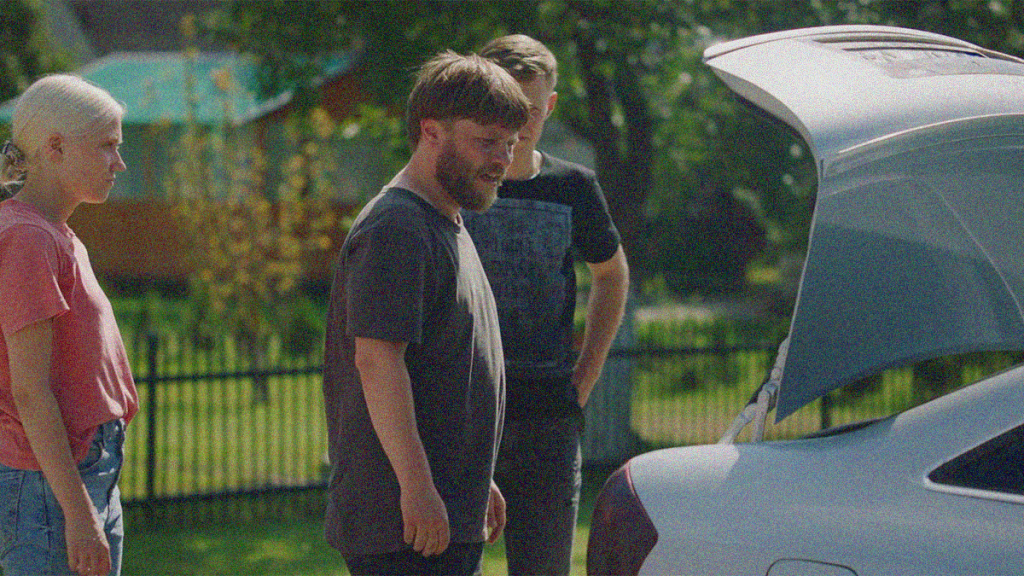
Gabija Bargailaite and Giedrius Kiela in PILGRIMS; courtesy of Dekanalog.



 jaredmobarak.com
Leave a comment