
Rating: NR | Runtime: 105 minutes
Release Date: December 13th, 2024 (USA)
Studio: Rue Dangeau
Director(s): Vivian Kerr
Writer(s): Vivian Kerr
Maybe I don’t want your help.
Society demands children set goals. It’s a byproduct of living in a capitalist country driven by career-oriented lifestyles wherein we inherently vilify the working poor as a means of inspiring kids to want more and be more. It’s how the working class can consistently delude themselves into believing they’re actually part of a middle class their paycheck-to-paycheck existence isn’t close to reaching. As such, I’ve known many people who, despite having worked during high school and college in part-time jobs, refused to even consider working one again upon graduation. It was as though they forgot half their co-workers were adults or that most also went to college. Whether it be pride or capitalist brainwashing, they couldn’t bring themselves to exist at a station below the life they swore they’d have.
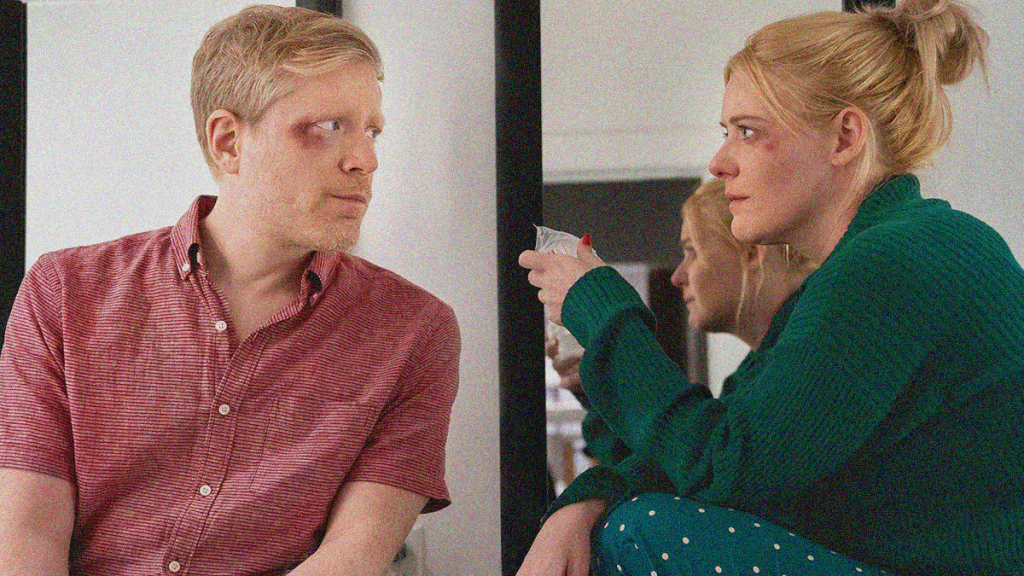
Enter Beth (Vivian Kerr). Recently laid off from her public relations job, she has left her daughter Birdy (Julianna Layne) with her brother (Anthony Rapp’s Ben) and sist-in-law (Lana Parrilla’s Stacy) under the auspices of a “work trip” when she is actually sleeping in her car while desperately running around Los Angeles to high-demand job interviews with hundreds of similarly qualified applicants. Would things be different if she simply told Ben the truth? Of course. He would invite them in with open arms since he practically raised her after their parents died. But that’s part of the problem. We’re supposed to exit our guardians’ shadow. We’re not supposed to need their protection forever and anyone who does is unjustly deemed a failure. Assistance therefore equals pity. A safety net to get back up quicker gets rejected for a struggle that some tragically never escape.
You should know straight off that Kerr’s Scrap (she also wrote and directed it) understands its privilege. The fact Beth has a well-to-do brother who is willing to support her shouldn’t be lost here. But it also shouldn’t negate what she is going through as a single mother trying to scrape by while a mounting sense of shame piles up. Kerr does a very nice job of using juxtapositions to ensure that we know she knows this is neither the worst-case scenario nor the best. Scenes with a homeless woman who has nowhere to go or a suburbanite blind to the fact the woman he’s helping in the grocery store today was the one he called the cops on yesterday provide the complexity and universality of the situation. It can happen to anyone. We’re all one tragedy, medical expense, or layoff away from poverty.
As such, the film never judges beyond expressing the reality that asking for help isn’t weakness. Any reactions to what’s happening with Beth are therefore born from the other person’s frustrations with their own lives since they don’t know exactly what she’s going through (she hasn’t told them and never does—at least not everything). Ben is dealing with career drama. He and Stacy are going through the rigors of fertility cycles. Even Beth’s ex (Brad Schmidt’s Joshua) is suddenly dealing with the guilt of leaving her the second she became pregnant years ago. All these people are in different states of psychological unrest to the point where Beth wonders if the truth might make her even more of a burden than she’s already become. She must first accept her new reality and its resulting sacrifices before moving forward. We can’t control life. We can only control how we live it.
It’s an important message told with a wealth of empathy that never disappears even as Beth spirals deeper and deeper into depression and denial. It’s also an honest portrayal of desperation. Because Beth should be desperate enough to go to a mall job fair and earn a paycheck, but shame has her answering Joshua’s phone calls instead since taking his money would keep up the appearances that being caught working retail couldn’t. And Kerr is very good in the role. The absent-minded compulsive spending. The lies to family and strangers alike proving she’s really only lying to herself. This is a flawed character doing the best she can within an equally flawed mindset. It’s only when she realizes happiness isn’t reliant upon “perfection” that she can begin to dismantle society’s baggage and finally breathe.

Anthony Rapp and Vivian Kerr in SCRAP.



 jaredmobarak.com
Leave a comment