

Originally posted at The Film Stage
An Irish Goodbye [2022]
Rating: NR | Runtime: 23 minutes
Release Date: 2022 (Ireland)
Studio: Network Ireland Television
Director(s): Tom Berkeley & Ross White
Writer(s): Tom Berkeley & Ross White
You can tell your mate Jesus he’s a right dickhead!
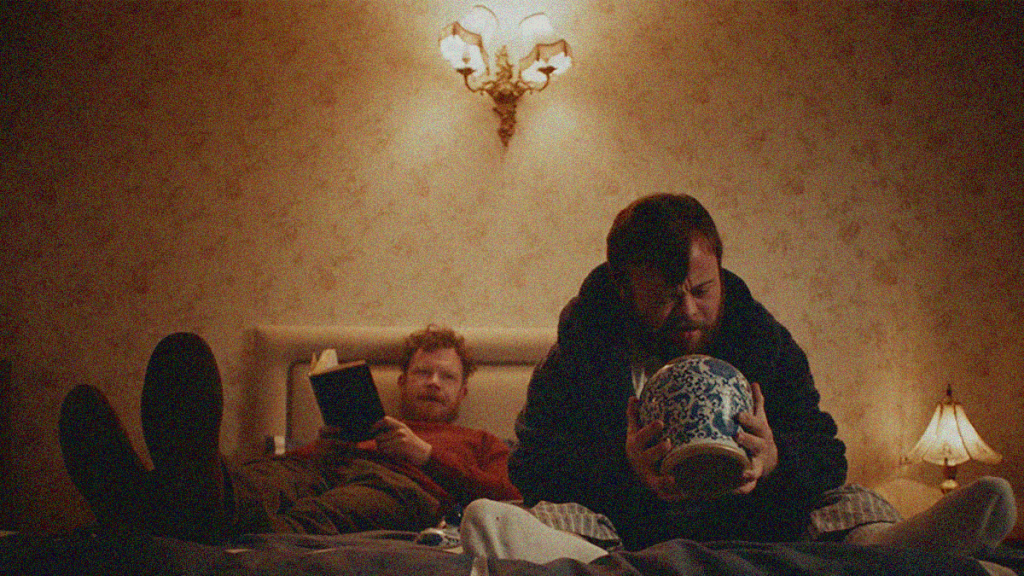
Back to attend his mother’s funeral in Ireland, Turlough (Seamus O’Hara) looks to get affairs in order before heading back to England. In his mind that means shipping his brother (James Martin’s Lorcan) with Down’s Syndrome off to an aunt and selling the family farm. Things aren’t that easy, however. Lorcan not only doesn’t want to go there, he doesn’t want to leave at all.
So, in the hopes of breaking through the unfeelingly pragmatic façade of his brother, he uses a list that Father O’Shea (Paddy Jenkins) has to prolong the inevitable. On it are one hundred activities they presume the deceased wanted to accomplish before dying—a bucket list written upon receiving her fatal diagnosis. Turlough agrees to help Lorcan complete it (with Mom’s ashes in tow), no matter how absurd, as long as the latter agrees to leave once they’re done.
Tom Berkeley and Ross White’s An Irish Goodbye is funny and heartbreaking in equal measure as a result since the long-since-gone sense of camaraderie and laughter has returned to the property only to inevitably disappear forever if nothing changes.
The list montage is fantastic with wild DIY takes on “sit for a portrait” and “ride a hot air balloon” that leave Turlough with a smile that had been absent since the start since Lorcan won’t take no for an answer—even when things don’t go as planned. Many things don’t too thanks to him eavesdropping on Turlough’s phone call with a real estate agent. Lorcan escalates the drama as time shortens, praying against all odds to remind his brother that they used to be best friends who’d never leave the other behind.
With memorable lead performances (even Jenkins, in a small role, steals scenes with an obvious boredom that takes his mind to inappropriate anecdotal places), beautiful cinematography, and a playful yet melancholic tone, it’s impossible not to get wrapped up in the emotions driving these brothers over the edge of conservative thinking. Because maybe they could make a go of it.
Maybe they could run the farm themselves with Lorcan not proving the burden Turlough imagines. We don’t ever learn anything about the latter’s life in England, so we can assume it’s nondescript and without anchor. Maybe an adventure like this is exactly what he needs to remember that he used to be happy even if he didn’t quite know it way back when. Lorcan believes as much and is willing to do everything in his power to see it through.

Winner:
Live Action Short
Ivalu [2022]

Rating: NR | Runtime: 16 minutes
Release Date: 2022 (Denmark)
Director(s): Anders Walter / Pipaluk K. Jørgensen (co-director)
Writer(s): Anders Walter / Morten Dürr & Lars Horneman (graphic novel)
Nobody knew where you were.
Based on the graphic novel by Morten Dürr, Anders Walter’s Ivalu tells the story of a young girl waking up to find her older sister gone. Pipaluk (Mila Heilmann Kreutzmann) is desperate to find out where she could be. Grandma doesn’t know. Dad (Angunnguaq Larsen) doesn’t care.
So, she travels the gorgeous Greenland scenery, visiting every place the two of them used to go while calling out her name. Maybe Ivalu (Nivi Larsen) is in the ice caves they used to hide in overnight. Maybe the water they used to fish by. Maybe even the abandoned military post they never went before—if the raven that seems to want Pipaluk to follow it is correct. And as every memory from those places rises to the surface, so too does the truth.
We know it from the beginning. At least we assume we do and hope we’re wrong. A quick glimpse within the girls’ pitch-black room as the door opens from the outside has a way of conjuring dark assumptions. To not know who was coming in before cutting to the morning to see who had left spells the worst. Suddenly talk about living with grandma adds context. So too does the general apathy of her absence. And when a tale of the “Mother of the Sea” arrives with a desire on Ivalu’s part to dive in and “comb her tangled hair” to save Pipaluk from a fate she can no longer bear, everything clicks into focus.
This is heavy subject matter told with a careful hand. Its realities are hidden by a poetic visual narrative constructed in the mind of a child who shouldn’t have to understand the abuse she’s obviously been witness towards. We are shown Pipaluk’s struggle to put the pieces together and recall that which exists in the fringes of her memories—that which she didn’t know meant everything to the horrors happening beneath this village’s noses.
It’s an awakening that centers this unwitting witness rather than victim or perpetrator, letting her process the nightmare without forcing the audience to relive the violence. The anguish in the aftermath is enough to know what occurred. So too is the decision to label Ivalu’s actions as a sacrifice rather than an escape.
Nominee:
Live Action Short
Le Pupille [The Pupils] [2022]
Rating: PG | Runtime: 39 minutes
Release Date: December 16th, 2022 (Italy/USA)
Studio: Disney+
Director(s): Alice Rohrwacher
Writer(s): Alice Rohrwacher / Elsa Morante (letter)
Seventy eggs in such hard times … madness.
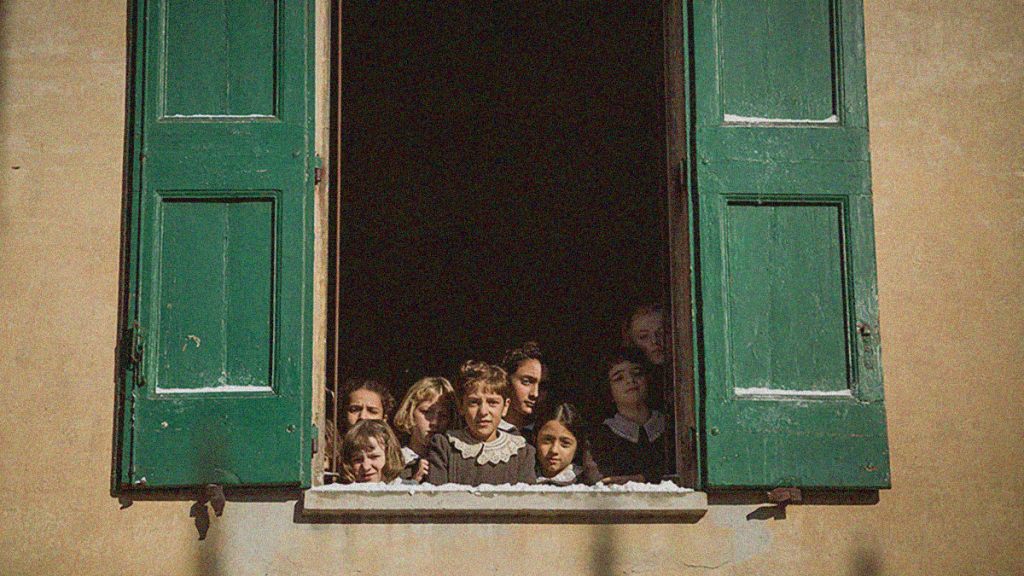
“Clumsily and freely” based upon a letter written a long time ago, Alice Rohrwacher delivers a cutely endearing Christmas short entitled The Pupils that takes place inside a church orphanage over the holiday. Populated by a bunch of young girls and their caretakers—led by Alba Rohrwacher’s Mother Superior—we are treated to the ironic lesson that being “bad” is often more enjoyable than being “good” thanks to Serafina (Melissa Falasconi), an angel-turned-bad-egg by way of a literal translation of a communal punishment.
Because while she didn’t partake in the blasphemous singing and dancing that occurred during a radio break gone awry, she’s told by the adults that she’s guilty by association. And if they speak the word of God, who is she to refute the charge?
It all leads to a hilarious game of “chicken” that’s all the funnier because neither participant knows they’re playing. Will Mother Superior blink first? Or will it be the innocent Serafina, her goody-two-shoes soul marred by the lewd lyrics that will not leave her mind?
Everything else that happens feeds into this confrontation from the chimney sweeps cleaning the roof to the convent’s barren coffers to the cluelessly selfish woman (Valeria Bruni Tedeschi) who’s frantic about having the orphans say a prayer for her beloved—the reasons of which aren’t as pure as you may first assume.
Rohrwacher splices in little cut scenes of the girls singing a song about the original letter, each letting their personalities shine through away from the scripted moments. These vignettes are where the whole shines most with mistakes and exasperation and boredom left intact to augment the otherwise slight nature of the main dramedy. And then there’s also the cake. A magnificent dish of English Pudding that would make anyone want to be bad. Moral schmoral.

Nominee:
Live Action Short
Nattrikken [Night Ride] [2022]
Rating: NR | Runtime: 15 minutes
Release Date: 2022 (Norway)
Director(s): Eirik Tveiten
Writer(s): Eirik Tveiten
So, maybe you want to come home with me?
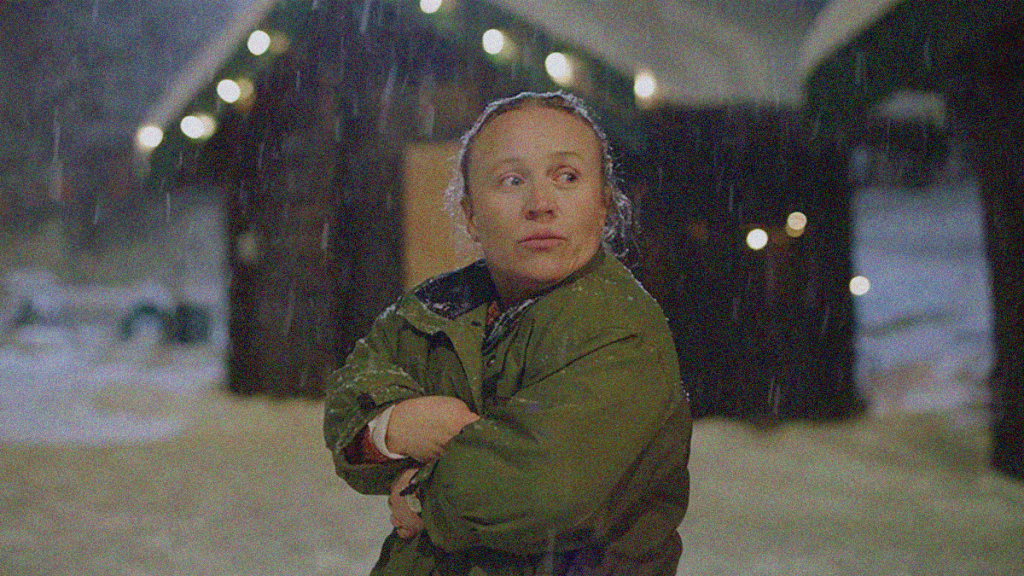
When the tram arrives only for its driver to get off and lock up, Ebba (Sigrid Kandal Husjord) can’t help but pry open a door to try and stay warm. It’s one thing to not allow passengers on an unattended tram, but another to leave one solitary person standing in the freezing cold.
The problem for Ebba, however, is that she won’t escape the cold unless she can close the door behind her. So, she heads to the driver’s seat and starts pressing buttons only to accidentally put the tram in drive. What is therefore left to do? Allow the actual driver to call the cops and have her arrested? Or keep going and see what happens next?
Ebba chooses path number two so Eirik Tveiten’s Night Ride can commence. Cue the inevitable next stop with a bunch of people waiting to board and the fateful near collision with a young trans woman (Ola Hoemsnes Sandum’s Ariel) to prevent her from simply running off.
Rather than be a meet-cute romantic comedy, however, the film reveals the ugliness of humanity via Allan (Axel Barø Aasen) and Benjamin (Jon Vegard Hovdal) instead. First they both mock Ebba for being a little person. Then the former starts hitting on Ariel, inviting himself over to her place only to discover the reality of the situation with the lift of a wig.
Suddenly it’s also a glimpse at mankind’s penchant to turn the other way when someone is in need of help. Tensions escalate, Ariel pleads for assistance, and everyone—including Ebba—put their heads down. So, our lead is faced with a second fork in the road: keep pretending nothing is happening and drive or stop the tram and confront the bullies.
You can probably guess which she chooses (her presence as driver not being on the up-and-up playing a role) as well as the humorous result of that choice where it concerns this bunch of strangers getting their just deserts as far as finding themselves in a frightening situation of their own. It’s a breezy little adventure that perhaps breezes past the issues it’s highlighting, but also enjoyable enough to accept at face value anyway.
Nominee:
Live Action Short
La Valise rouge [The Red Suitcase] [2022]
Rating: NR | Runtime: 18 minutes
Release Date: 2022 (Luxembourg)
Studio: Cynefilms
Director(s): Cyrus Neshvad
Writer(s): Cyrus Neshvad & Guillaume Levil
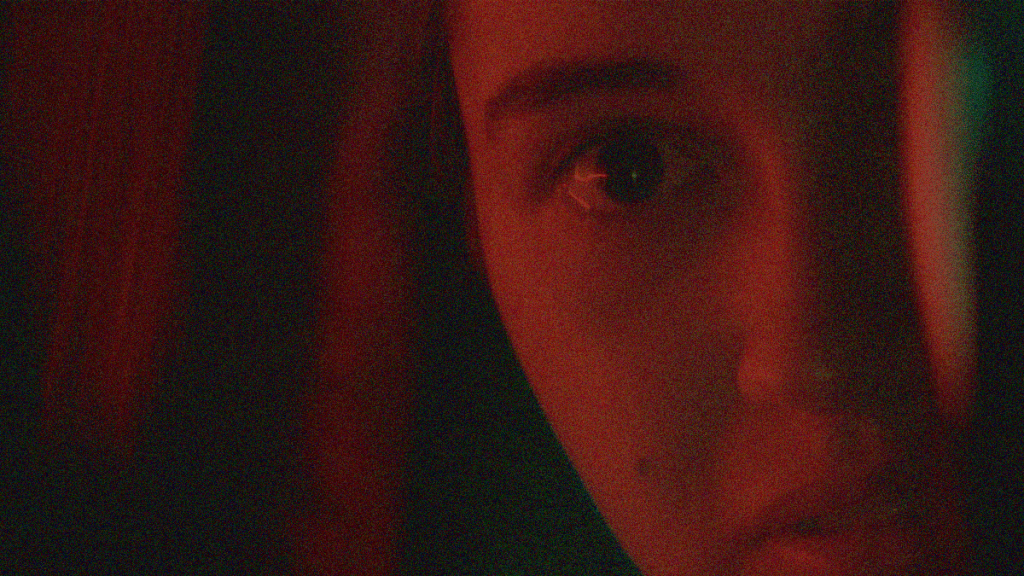
A lone suitcase goes around the airport turnstile until the entire conveyor belt stops. Only then do we see Ariane (Nawelle Ewad) standing and watching, no longer able to stall. She picks it up. As well as her phone. Her father is calling to ask where she is because she should have landed by now.
With a sheepish lie about being delayed, she tells him she’s on her way. And yet, upon approaching the automatic doors that let her out into the lobby, she runs and hides. The customs agents obviously wonder what’s going on with this Iranian girl clutching a bag, but she doesn’t understand French or English.
I can’t say I wasn’t worried about what might happen next. The Academy loves misery porn, so Cyrus Neshvad and co-writer Guillaume Levil making this scared Persian teen into a suicide bomber wasn’t a far-fetched assumption to have. The title is The Red Suitcase, after all. They know it too, prolonging the reveal only long enough to conjure preconceptions before discovering that Ariane isn’t the threat in this drama.
She’s the victim. Because the reason she is so afraid to exit those doors is that the husband (Sarkaw Gorany) her father arranged to pick her up is waiting. What ensues is thus a tense cat and mouse chase that communicates far beyond language barriers to show just how much she’ll sacrifice to escape the patriarchal clutches of the men dictating her life.
It’s very effective in its machinations whether via culture clash (exchanging toman for euros doesn’t go quite as she thought) or the terror of being mere feet from her pursuer. She can’t even defend herself from him with anything but her silence and potential invisibility. He knows the language of those around them. He can motivate them to be on his side of a story that she cannot refute.
So, while the whole is a bit reductive in a way that will get ignorant people screaming “Sharia law!” to push past the human element towards knee-jerk xenophobia against Muslims, the look in Ewad’s tearing eyes will prove it is really about autonomy and the sad truth that many only gain it after first giving everything else they have up.
Nominee:
Live Action Short
Images courtesy of ShortsTV.




 jaredmobarak.com
Leave a comment