

Originally posted at The Film Stage
Vikhod [Haulout] [2022]
Rating: NR | Runtime: 25 minutes
Release Date: 2022 (UK)
Director(s): Maksim Arbugaev & Evgenia Arbugaeva
Writer(s): Maksim Arbugaev & Evgenia Arbugaeva
Dense fog. Can’t see them yet.
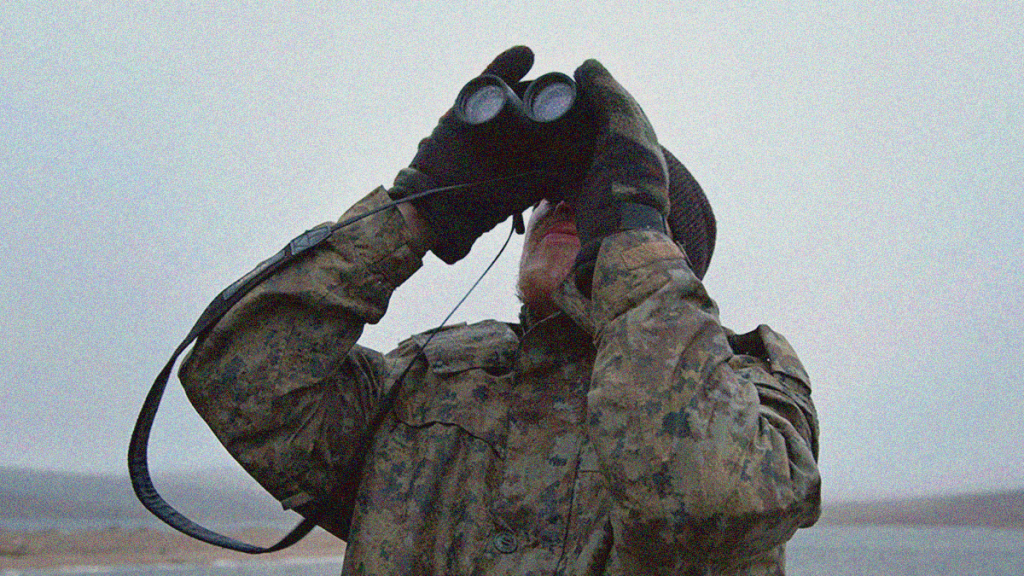
It’s September and marine biologist Maxim Chakilev is hiking in Arctic Siberia by his wooden beach shack, talking into a voice recorder that he isn’t able to “see any” yet. We don’t know what “it” is that he’s looking for nor why he’s here.
Maxim Arbugaev and Evgenia Arbugaeva’s cameras merely capture him with an objective eye as he reacts and moves in faux isolation. Only when October comes and he opens his door do we understand his research and the theme of climate change’s effect on wildlife. It’s a stunning reveal, expertly timed and set-up for maximum impact since you can’t expect what’s coming if you go in blind.
This is why Haulout doesn’t provide context until the very end. Whether it’s November or December when Chakilev finally leaves, snow is covering the ground as text appears to tell us both what we’ve already assumed and details of which we cannot imagine.
Does the whole therefore feel like a trick? A little. The quiet before Chakilev opens that door and the chaos after become secondary to the shock and awe of the reveal itself. It’s still an important story to tell with crucial evidence that cannot be refuted by climate deniers, though, since scientific fact exposes the cost of a walrus’s life without ice to rest upon.
The beautiful cinematography and fly-on-the-wall approach mimicking Chakilev’s own observational detachment render the whole a captivating watch because it forces us to really see what’s happening. There are no cutaways to talking head interviews or explanatory graphics. We are as uncertain and unprepared as the animals who find themselves piled atop each other to rest before going back into the water.
Move an inch to the right and you risk the wrath of two tusks in your back since there’s literally nowhere to go. It doesn’t therefore take much to guess how it will all end. This quantity within this small of an area can only lead to unnecessary death. The fewer months of ice these walruses receive, the fewer their numbers can survive.

Nominee:
Documentary Short
The Elephant Whisperers [2022]

Rating: PG| Runtime: 41 minutes
Release Date: December 8th, 2022 (India)
Studio: Netflix
Director(s): Kartiki Gonsalves
Writer(s): Priscilla Gonsalves / Kartiki Gonsalves & Garima Pura Patiyaalvi (story)
You feed me and I’ll feed you.
In a forested sanctuary in South India, Bomman and Bellie are tasked by the rangers to nurse back to health and raise young orphaned elephants who have lost their herds due to forced migration as a result of climate change.
Bomman is a third-generation elephant protector teaching today’s youth to follow in his footsteps. Bellie is the only woman in the region doing this work with Raghu being her first assignment. And while the two will ultimately fall in love and get married, they pride themselves on being good parents from the beginning—treating Raghu like their own flesh and blood. A deep bond is formed, one marked by familiar human traits like jealousy, trust, and longing.
Kartiki Gonsalves’ The Elephant Whisperers follows their day-to-day dealings with Raghu and eventually Ammu. From feeding and bathing to playtime, Bomman and Bellie narrate their evolving lives and the impact these animals have upon them. It’s a heartwarming tale with its share of emotion and humor that succeeds at putting a face to the growing issue of wildlife conservation at a time of great change in nature.
With a straightforward narrative thrust and endearingly personable lead characters (human and elephants alike) it’s easy to let the film take you on this brief journey of hope and inspiration. Because as long as people like Bomman and Bellie exist to help counteract the destruction wrought by an increasingly apathetic world, perhaps we can still come out the other side.

Winner:
Documentary Short
How Do You Measure a Year? [2021]
Rating: NR | Runtime: 29 minutes
Release Date: 2021 (USA)
Studio: HBO Documentary Films
Director(s): Jay Rosenblatt
I know what dreams are. You think and sleep at the same time.
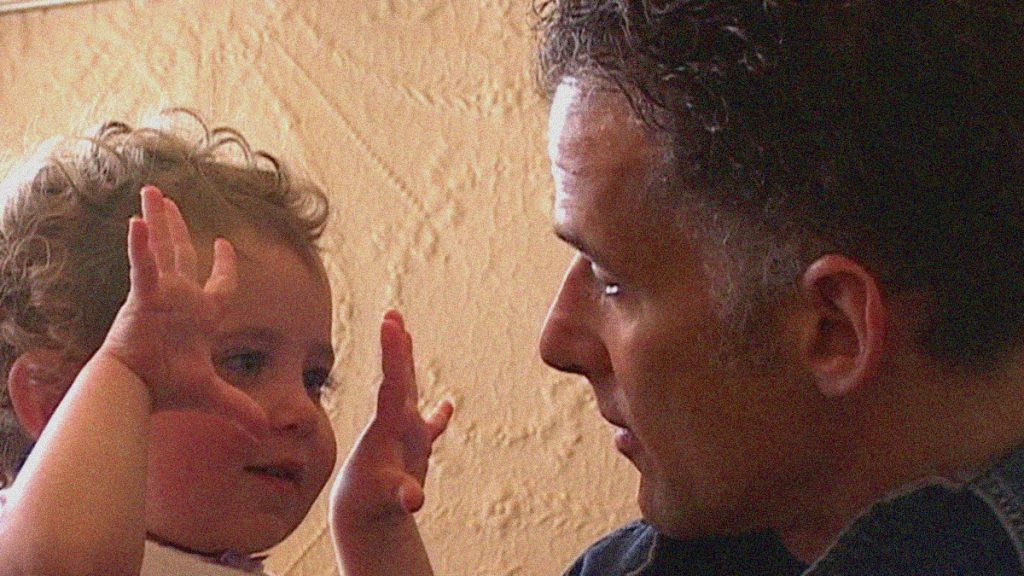
Personal time capsules are interesting in the sense that putting them out into the public sphere demands you be judged alongside the work itself. To watch How Do You Measure a Year? is therefore as much about marking the passage of time physically and psychologically through its subject (Ella Rosenblatt) as it is the motives of its filmmaker (Jay Rosenblatt).
Because while things surely began as an intimate document for familial purposes, it’s tough not to see its release to the world as a bit narcissistic—especially considering one of the questions Jay asks his daughter every year on her birthday (the film’s conceit) is about their relationship. Where its depiction of troubled yet authentic love puts a warm smile on the faces of those who’ve experienced it, it screams “I’m a great Dad” to those who didn’t.
This isn’t intentional. It’s simply born from the reductive nature of hearing these two voices devoid of the other 354 days of each year. How much of her answers play to the camera? Play to his desires? Not only must you view it from this skewed and potentially biased point of view in the moment, but the finished result was also put together by Rosenblatt in such a way that colors the objective with a blatantly subjective light.
It’s therefore an intriguing case where the real draw is in what can be read between the lines rather than what has been captured. We imagine what it was that Ella meant when she said she was afraid of him as a young girl and the “fights” she alludes to later. That mess is what captivates. Not the platitudes.
So, are those platitudes enough? Are the allusions to human issues (one year delivers a laconic answer to one question before depression takes hold despite never approaching that subject beyond the spark of our assumptions) enough to sustain the otherwise cute, surface-level lovefest of the rest? Sure.
I enjoyed watching. I enjoyed the “ritual” of it all and can applaud the bond these two people share. It seems as though Jay did things right as a father and that Ella evolved to accept that whatever struggles they may have had were a product of love. I think it works emotionally more than intellectually as a result, but I can’t begrudge Oscar voters for choosing a fluffy human interest piece when accounts of our worlds’ darkness are so prevalent otherwise.

Nominee:
Documentary Short
The Martha Mitchell Effect [2022]
Rating: PG| Runtime: 40 minutes
Release Date: June 17th, 2022 (USA)
Studio: Netflix
Director(s): Anne Alvergue / Debra McClutchy (co-director)
It’s not that the president didn’t like women. He didn’t like loud women.
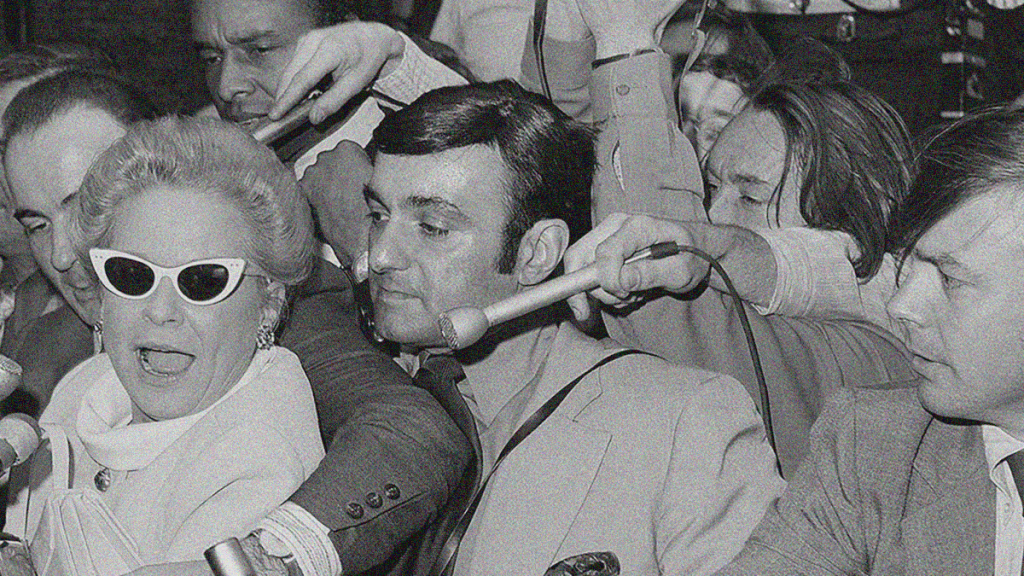
Anne Alvergue’s The Martha Mitchell Effect is a well-researched and composed (from archival material) look into one of the key figures of the Watergate scandal. Known as an outspoken jester of sorts for her penchant to spout opinions to the media and members of Richard Nixon’s administration (in which her husband John served as Attorney General and campaign manager), Martha Mitchell was “allowed” to be herself so long as it either bolstered the GOP’s position or helped deflect attention from it.
And I think the short does well to prove she would have been fine in that role—a “patriot” serving her husband and president as long as they kept her in the loop. We’ll never know considering the sequence of events that unfolded, but her decision to attack seemed less about doing “right” than enacting revenge.
You could therefore say that Martha epitomized the white woman conservative. She stood by her man and voted against her own autonomy because she was in a position to still benefit by proximity and compliance. As we discover on-screen, her reason to go on the offensive after Nixon and his staff sought to silence her and gaslight the American people into believing she was crazy stemmed from her desire to protect John from what she called a “frame job.”
She felt Nixon not only turned on her, but that he was willing to let her husband take the fall for his actions. That, of course, wasn’t exactly the case. Soon she’d realize John was as involved in Watergate as he was in suppressing her ability to prove it. Martha was ostensibly waking up from a political indoctrination that existed deep within her bones.
Her story reveals the rampant misogyny in Washington DC through the attitudes and reactions to her simply talking to the press while engaged with an administration that intentionally avoided them. And it goes even further to show just how easy it was for politicians to turn on their wives since they treated them as tools to help preserve their image rather than human beings to love as equal partners.
It also exposes the complicity of the media merely by showing a slew of news clippings and TV reports wherein even those praising Martha used unflattering photos and puns to poke fun. They helped to defame her and then minimized her heroics to highlight the entertainment angle instead—ultimately parading her around to exploit the story much like her husband used to exploit her appeal.
Nominee:
Documentary Short
Stranger at the Gate [2022]
Rating: NR | Runtime: 29 minutes
Release Date: 2022 (USA)
Studio: 7 Palms Entertainment / The New Yorker
Director(s): Joshua Seftel
I was hoping for at least two hundred or more. Dead. Injured.
There’s a way to tell the story of a white former Marine so lost to the training that told him to kill Muslims in the Middle East that he wanted to kill the American Muslims in his neighborhood and the path towards understanding that’s taken by way of those same people. And then there’s Joshua Seftel’s Stranger at the Gate: a despicable manipulation that intentionally plays with the audience’s expectations in such a way that going in blind can’t help but piss you off.
Because it doesn’t introduce Richard McKinney as a reformed violent Muslim-hating jarhead. No. It introduces him through the filter of his ex-wife (Dana) and stepdaughter (Emily) giving solemn interviews about not knowing they were living with a monster.
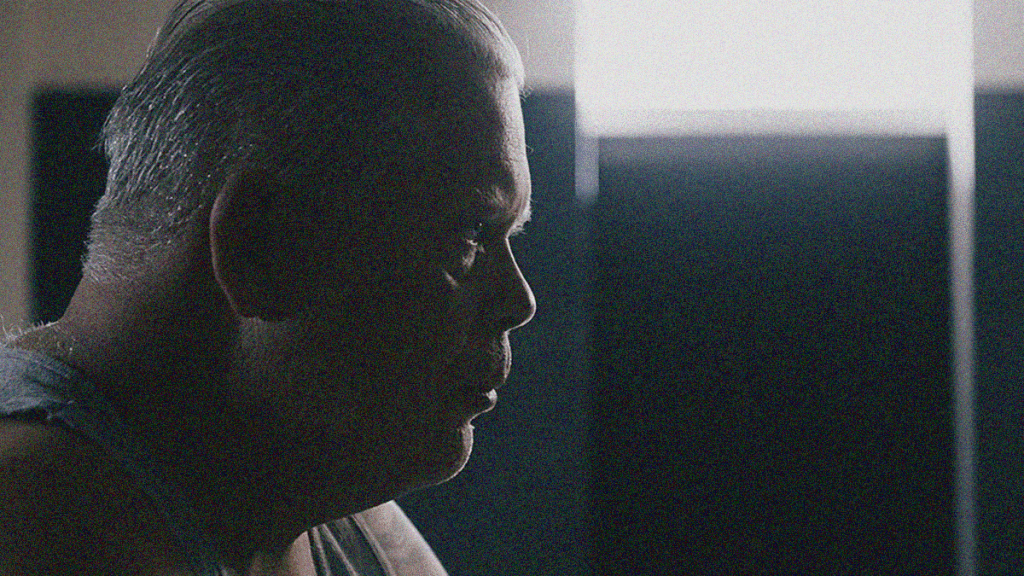
Our first glimpse of “Mac”? A blurred visage that comes into focus as he sits down in the way incarcerated prisoners do when asked to tell their side of the story from jail. That’s when we start to learn about his indoctrination by the military and his gradual dehumanization of Muslims as being terrorists in their DNA.
It’s when we learn he built an IED and planned to blow-up the local mosque in the hopes of murdering at least two hundred members before proudly standing up in court to receive thanks for being a true patriot. And it’s when we’re told that his scouting mission to find the best spot for the bomb ended with Dr. Bahrami kneeling at his feet and hugging him—an act of unprovoked compassion that opened Mac’s heart to reality.
Seftel feeds on our preconceptions by utilizing cinematic language associated with a certain type of documentary to give us the opposite. He doesn’t, however, acknowledge it. He doesn’t present the shift in focus as a “gotcha.” He just plays it all straight as though he wasn’t purposefully misleading us into believing we were about to see photos of dead bodies in the aftermath of an attack.
That’s not a “twist.” It’s a betrayal and a major disservice to everyone involved because it trivializes an important example of the power of ignorance and the ability for even the most hardened racist to open his eyes if only he is willing to listen and learn from the source rather than the echo chamber of hate from where he came. A great subject is ruined by negligent, exploitative filmmaking.
Nominee:
Documentary Short
Images courtesy of ShortsTV.




 jaredmobarak.com
Leave a comment