
Originally posted at The Film Stage
The Boy, the Mole, the Fox and the Horse [2022]
Rating: TV-G | Runtime: 32 minutes
Release Date: September 23rd, 2022 (UK) / December 24th, 2022 (USA)
Studio: BBC One / Apple Original Films
Director(s): Peter Baynton & Charlie Mackesy
Writer(s): Jon Croker & Charlie Mackesy / Charlie Mackesy (book)
Being honest is always interesting.
You can’t go wrong with a children’s story dealing with the idea that you are worthy of life just the way you are. It’s the sort of heavy subject matter that could very quickly move towards suicidal ideation, so you do have to applaud Charlie Mackesy (who co-adapts with Jon Croker and co-directs with Peter Baynton from his own illustrated book also entitled The Boy, the Mole, the Fox and the Horse) for approaching it from a place of compassion, empathy, and, most of all, youth.
So, when Boy (Jude Coward Nicoll) suddenly finds himself unable to control his tears after an error in judgment that leaves no one the worse for wear, all he needs is a gentle reminder from his new friends that crying is a strength rather than weakness. Those tears are necessary and meaningful. They should be felt, understood, and accepted.
There are many such lessons within this dream-like adventure from Fox (Idris Elba) admitting he’s quiet mostly because he finds he has nothing of importance to say to Horse (Gabriel Byrne) replying that honesty is never not important. Add Mole’s (Tom Hollander) penchant to always want cake and Boy’s desire for home and this unlikely quartet is able to speak from the heart with authentic emotion, humanity (animals or not), and a hopefulness towards an uncertain future.
Predator or prey, every living creature seeks to survive—both physically and psychologically through friendship and love (even if we may be embarrassed to say the latter word out loud). One could even say Mackesy is answering the most important question of all with an audience not quite old enough to know to ask: What’s the meaning of life?
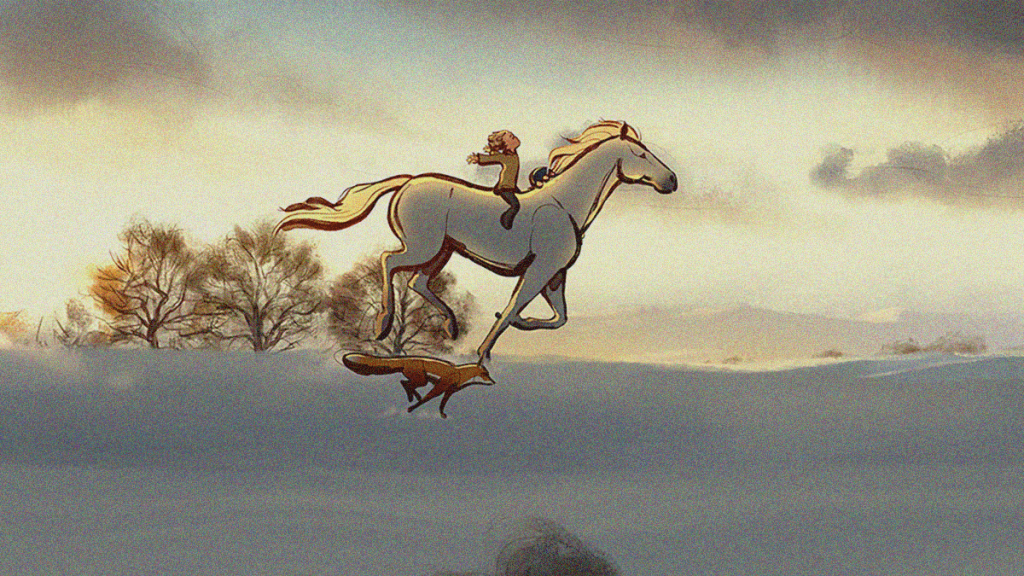
The film itself is slow-paced and deliberate both in its movements and cadence (much like a Winnie the Pooh cartoon from my own childhood). And the animation style is wonderful with a watercolor-esque aesthetic outlined by translucent ink in wide loops that become a static part of the characters rather than a constantly changing pen line from frame to frame.
It mimics Mackesy’s original illustrations very well, filling in the whites with soft colors while never forgetting the starkness of the winter snow at their feet so each character can pop (Fox’s red) and/or become lost (Horse’s white in the trees) depending on whether the moment calls for danger or surprise. Soon, however, any such fear of the unknown will dissolve thanks to the patience to pause and listen. Only then will you discover your enemy is often just as scared as you.


Winner:
Animated Short
The Flying Sailor [2023]
Rating: NR | Runtime: 8 minutes
Release Date: 2023 (Canada)
Studio: National Film Board of Canada (NFB)
Director(s): Amanda Forbis & Wendy Tilby
Writer(s): Amanda Forbis & Wendy Tilby
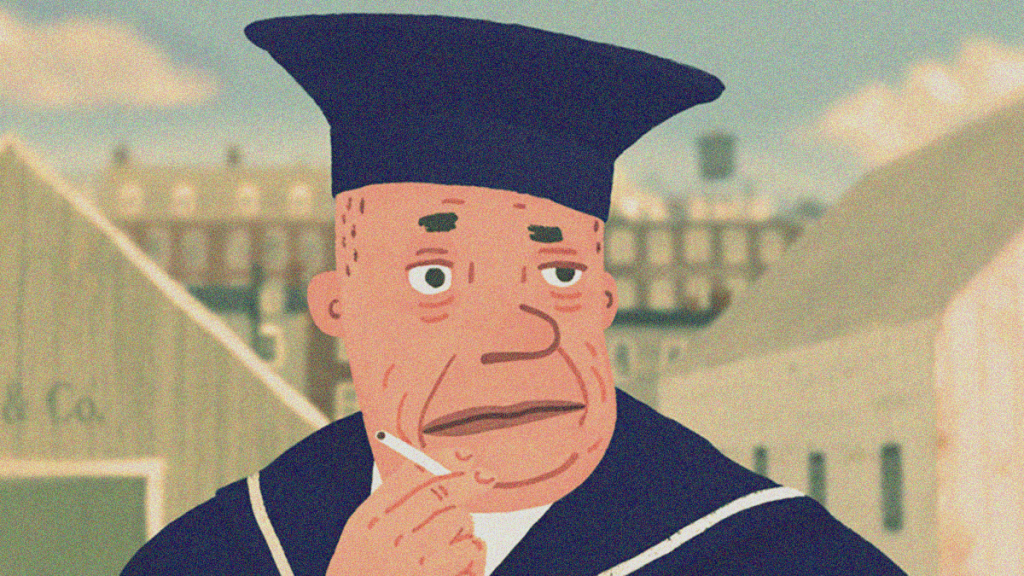
Amanda Forbis and Wendy Tilby aren’t kidding when they sneak a “True Story” label in the middle of an explosion that finds a sailor blown into the sky. There really was a man named Charles Mayers who found himself naked and unscathed two kilometers from the water where two boats (one of which carried TNT) crashed and ultimately created what’s known as the largest accidental explosion in history. Forbis and Tilby contemplate how that journey may have unfolded with an abstract, sensory-focused animated short entitled The Flying Sailor.
It’s a unique work composed of crudely drawn people against a 3D-rendered background with an impressive score (Luigi Allemano) and memorably kinetic detonation. We ultimately watch from the outside as the sailor loses his clothes to the chaos, his body spinning uncontrollably as it rises higher and higher before getting lost in the stars.
We also witness his thoughts during the journey—those memories we’re told flash before our eyes of the good times in life that marked who we were when we were alive. And if we recall the joyful moments at death, we must conversely find ourselves reliving the bad at our return to life. Because the moment his trajectory flips, all those scenes from before gain the added context of failure that followed.
The whole is an experience more than anything else. We’re taken along for this ride through music and imagery, finding dramatic meaning in what proves a humorous anecdote (when removed from the destruction that occurred around this specific survivor). It’s broken eggs and punched faces, supernovas and black smoke. And, in the end, it’s a matter of luck. Everything that goes up, must come down. Some are able to walk away while others must unfortunately take their last gasp.
Nominee:
Animated Short
Ice Merchants [2023]
Rating: NR | Runtime: 14 minutes
Release Date: February 16th, 2023 (Portugal)
Studio: Cinemundo
Director(s): João Gonzalez
Writer(s): João Gonzalez
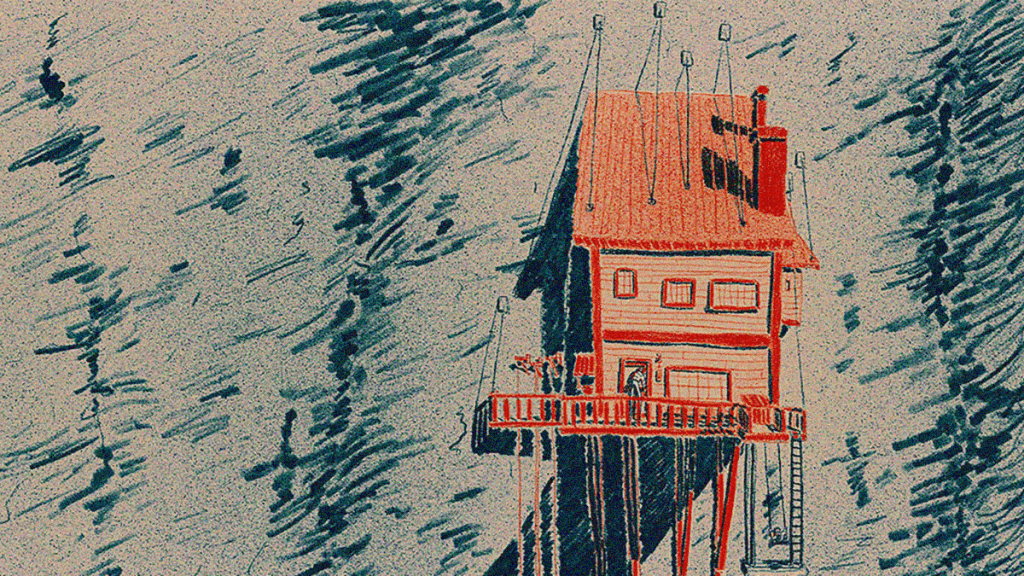
Watch out for vertigo thanks to João Gonzalez’s Ice Merchants beginning with a young boy swinging above a platform about five feet wide and twenty thousand feet up in the air, suspended off a mountainside. Relax those hands and risk missing your landing as only the tiniest margin for error protects him from flying into the open sky.
Not that doing so would scare him. It’s what he and his father do each day as long as the thermometer reads subzero. They chip their ice block into cubes, secure the goods in a chest, and parachute down to the town below—the wind whipping the hats right off their heads. They sell the ice, buy new headwear, and take a makeshift elevator back home to start again.
It’s a fun setting and narrative device captured in heavy, coarse strokes of moving color. Father and son are elongated figures in red, the camera often rendering them flat as it comes in close to capture their movements like a pendulum. And alongside the comedic sense of repetition and familial camaraderie also lies a sense of melancholic beauty. First it’s seen in those moments left lingering upon the hats as they converge in an embrace above the characters as they descend. Then it’s in the way both cherish a yellow mug without an owner. A ghost of past love.
With the vertigo comes massive anxiety too as Gonzalez ensures we know just how far up in the sky his characters are. The wind is always moving and the suspension rope securing their home to the rock is always creaking. The temperature initially goes down before slowly rising—the obvious consequence (no more ice) joining the less obvious (a landslide) to risk everything in an instant. Panic turns to longing turns to concession. And the joke that they refuse to secure their hats pays off with a heartbreaking yet heartwarming resolution.
Nominee:
Animated Short
My Year of Dicks [2023]
Rating: 16+ | Runtime: 24 minutes
Release Date: February 17th, 2023 (USA)
Studio: FX Network
Director(s): Sara Gunnarsdóttir
Writer(s): Pamela Ribon / Pamela Ribon (memoir Notes to Boys: And Other Things I Shouldn’t Share in Public)
The title doesn’t lie. My Year of Dicks is exactly that: five chapters from 1991 wherein Pam (Brie Tilton) sought to lose her virginity. Five boys. Five penises. And the most uncomfortable conversation a teenager can ever have with a parent.
From unrequited love to realities that will never touch the fantasy drawn up in her head, Pam tries to be what they want while also trying to get what she wants and all the while finds herself embroiled in embarrassing, sometimes problematic situations that are so hilariously obscene that they must be true. We can assume they are too since Sara Gunnarsdóttir’s film was adapted by Pamela Ribon from her own memoir. Some material is too good to not bite the bullet and share with the world.
Because beyond the intrinsic humor that awkward sexual encounters supply, there’s also the adolescent act of pursuing sex while it hides as a culturally taboo subject the likes of which too many teens find themselves completely ignorant towards due to a Puritanical traditionalism that leads many adults to clam up and pretend the topic doesn’t exist.
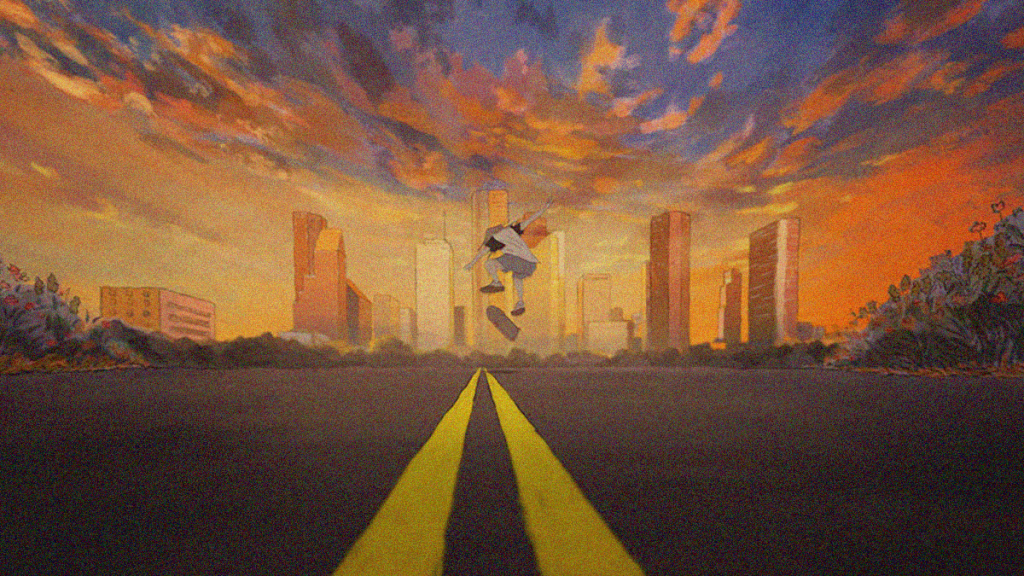
To normalize the romanticism, fetishizations, close-calls, consensual quid pro quos, and sense of hopeless frustration is to help shed light on what too many repress. And what better way is there to do that than with fanciful animation turning skater boys into vampires, mortified innocents into slime monsters, and an over-excited hand-holder into a kawaii character ripped straight from an anime episode?
The shifting aesthetics matching the subject matter is a major bonus alongside the evolving (or devolving) level of emotional investment in the mission on behalf of Pam when introducing each chapter with increasing irritation. And we shouldn’t discount Ribon’s story structure for following tropes with a self-awareness that allows them to unfold organically.
Case and point: Pam’s BFF Sam (Jackson Kelly). No one who has ever watched a movie will be surprised to discover this platonic relationship has the potential for more, but, rather than milk it for a last second revelation, the film confronts it head-on halfway through for an authentic bit of friction. Because romance isn’t a storybook. Not with the jerks using you, the marks you use, or the safe bet. Thankfully, that inevitable rejection and pain only makes the real thing better.
Nominee:
Animated Short
An Ostrich Told Me the World Is Fake and I Think I Believe It [2022]
Rating: NR | Runtime: 11 minutes
Release Date: 2022 (Australia)
Studio: Netflix
Director(s): Lachlan Pendragon
Writer(s): Lachlan Pendragon
Question everything young man, the world is not quite what it seems.
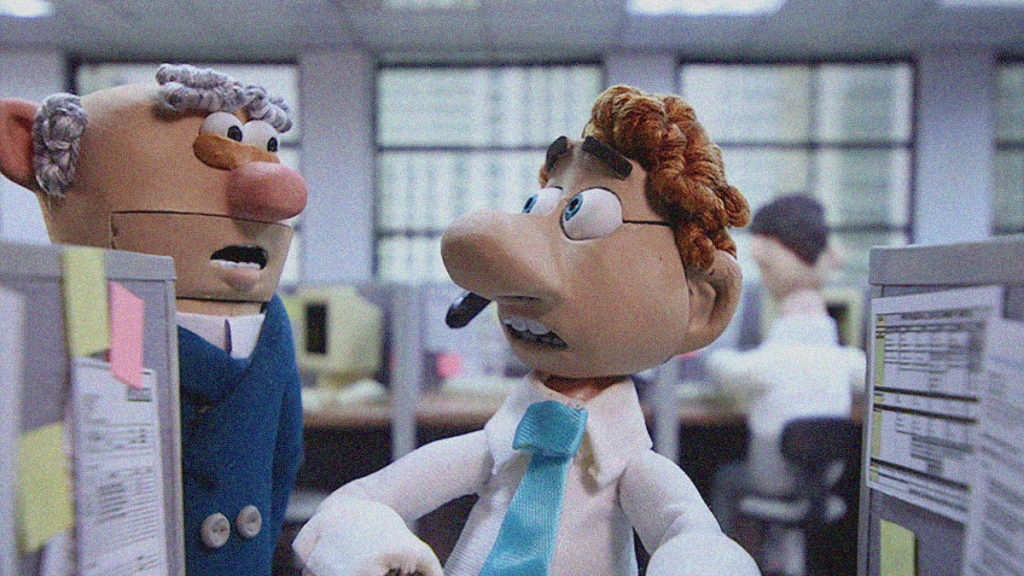
What would happen if a clay maquette saw through the artifice of its own claymation movie set existence? Writer/director Lachlan Pendragon looks to find out via his short An Ostrich Told Me the World Is Fake and I Think I Believe It and its unsuspecting lead Neil (Pendragon).
The character sells toasters over the phone in an office cubicle and is no worse for wear beyond the fact that no one needs a toaster. Wherein he’d normally just go about the routine anyway (Or would he if none of this is real?), however, he decides to leave his desk and converse with his co-workers—most of which start losing faces and legs while the world outside turns green.
It’s an ingenious concept executed to perfection as the majority of the film is seen through a camera screen with the real-life animators’ arms rapidly moving behind it to mark each frame’s otherwise imperceptible shift. This viewpoint conjures allusions to The Truman Show until the titular ostrich appears to throw things straight into a place of dark surrealism a la Westworld instead. Because the only reason we’d be watching through a filter of our world’s creation would be to eventually bring Neil into it, right? Talk about a horror show of metal tools, plasticine copies, and giant hands threatening to wrap their fingers around him.
I don’t want to say too much since the narrative progression is finely tuned to deliver on both the comedic and horror aspects inherent to the endeavor of bridging two “universes” in the meta-sense of an animated figure come to life. Just know that nothing is random—not even the ostrich. It’s all a delightfully absurd play on craft that turns those awe-inspiring stop-motion process videos at the end of every Laika production into the film itself.
Nominee:
Animated Short
Images courtesy of ShortsTV.



 jaredmobarak.com
Leave a comment