
Rating: NR | Runtime: 109 minutes
Release Date: November 2nd, 2023 (New Zealand) / June 14th, 2024 (USA)
Studio: Ahi Films / Gravitas Ventures
Director(s): Alice Englert
Writer(s): Alice Englert
Never ever give in to hope.
Lucy (Jennifer Connelly) is desperate for release. From her past traumas, present flaws, and future mortality. Lost in this sense of insufficiency (her mother committed suicide, her husband divorced her, her daughter barely calls and never visits), she hopes (despite his mantra being to “never give into hope”) that spiritualist Elon Bello (Ben Whishaw) will be able to unlock the pain and suffering that’s bottled up inside.
It isn’t long, however, before Lucy realizes just how silly that fantasy was after experiencing his “enlightened” theatrics first-hand and recognizing how the other attendees of the retreat were so quick to blindly follow his vague fortune cookie wisdom as though anything being taught possessed any substance beyond the usual circle jerk of regurgitated platitudes.
Because of that, the first half of Alice Englert’s Bad Behaviour can start to feel interminable. We see that Lucy understands the sham of it all just like we do. So why must we watch them go through as many exercises as they do—all while cutting to her daughter (Englert’s Dylan) performing stunts on a New Zealand film set—only to expose the fraudulent nature of the whole that isn’t being hidden at all? I couldn’t even pretend to think of an answer for a good chunk of its circuitous motions.
But then Lucy starts to open up regardless of the charade. She embraces the forum to speak from the heart even as everyone else speaks to have Elon pat them on the back for a job well done. This experience is excruciating for us because it is excruciating for Lucy too.
That’s kind of the point of the film. Mother and daughter wielding violence and sex respectively to find control amidst the scars of childhoods gone awry thanks to flawed mothers who couldn’t give them what they needed or deserved. All the critics dismissing the film as a shallow look into “mommy issues” aren’t necessarily wrong about the subject (good on Jane Campion for agreeing to cameo since she’s Englert’s own mother), but I do think they are about the vehicle.
I don’t think it’s shallow at all. The filmmaking is imperfect with the pacing leaving a lot to be desired, but there’s some real potent stuff happening beneath the surface—especially via Connelly’s intensely emotional performance. The humor is meant to offset that heaviness, but it does sometimes undercut it.
The second half does a lot of work to overcome this truth. So too does a midpoint fracas at Dasha Nekrasova’s expense that lets Lucy and Elon’s true natures come out (what an insanely entertaining spectacle). It might be a little too late for some, but I’ll simply say that you should stick with it anyway to witness the fruits of Lucy and Dylan’s self-destruction.
Englert’s script is never better than when these two characters are on-screen together with as much distrust for the other as love to push buttons that they’ve both become too tired to reflexively brush away. Have they acted poorly? Sure. Do they have reasons that probably demand professional help to process? You bet. But none of that means they’re bad people. They might just need the other to admit as much before they can admit it for themselves.

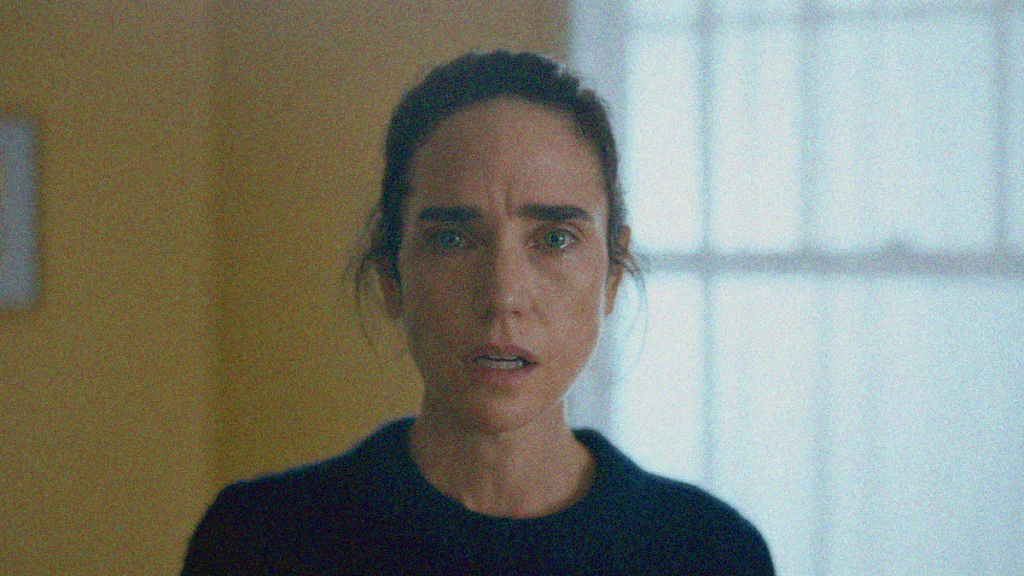
Jennifer Connelly in BAD BEHAVIOUR; courtesy of Sundance.



 jaredmobarak.com
Leave a comment