
Rating: NR | Runtime: 80 minutes
Release Date: January 30th, 2023 (USA)
Studio: PBS
Director(s): Phil Bertelsen
I don’t know whether he was my friend or my enemy.
The photographs speak for themselves. Ernest Withers captured the Civil Rights movement in all its pain and glory from behind his camera, befriending and assisting everyone who came through Memphis as an ally working to ensure the country and world knew what was happening. And yet there’s a question as to whether the legacy of his images is enough.
Why? Because it was later discovered that he was also an FBI informant. Some obviously took that news as a betrayal. Others contextually reconciled it with a segregationist era that made it so saying “No” to white men in power wasn’t an option. Even more look at the transcripts and wonder if Ernest just told them what they wanted to hear regardless of truth before pocketing the cash guilt free.
Phil Bertelsen’s documentary The Picture Taker puts Withers’ work alongside numerous new interviews to simultaneously tell the story of his career and capture the reactions towards this bombshell revelation from those who knew him best. The former goal succeeds as Ernest truly lived a miraculous life that moved through worlds with his camera as a shield.
The latter is unfortunately mostly hearsay either from descendants of those who were there or assumptions made from documents you can’t trust considering most were second-hand, agenda-driven accounts by his FBI handler rather than himself. So, while the reality of Withers’ position as an informant adds invaluable intrigue, don’t expect any concrete answers as far as motives or impact are concerned.
We receive educated guesses based on the documentation at-hand and the paranoia born from hindsight of those now questioning how Ernest was always right there by their side for every march, protest, and closed-door meeting. In the end it makes sense if he was merely taking a paycheck and using FBI resources to bankroll his library of images that did more to help Black America than hurt it.
Because nobody thinks he purposefully tried to harm those his information helped surveil, arrest, or assassinate regardless of whether it ultimately played a role. Because one must also remember the racial power dynamic at play. One must consider Withers’ past as a police officer who understood the game. And, of course, we can’t forget those his photography saved.
Bertelsen constructs his film as a resource for this context without passing any judgment. He lets the family speak their peace and explain the ways in which they continue using his art and legacy for good in their community. He lets historians paint the picture behind the pictures for a better understanding of the time.
And Withers’ presumed victims get their opportunity to rethink their memory of their friend and conclude whether nothing or everything changes in the wake of this new knowledge. We have that luxury too. Absorb what’s said, weigh the scales between good and evil, and bask in the artistry that stands up to both. Hero or villain, no one can deny his talent.
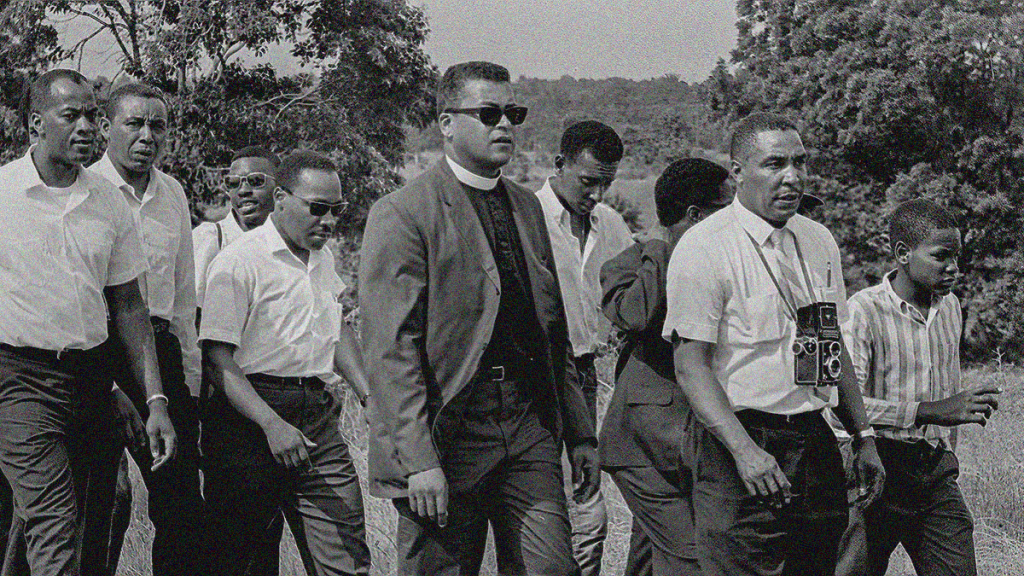
Credit: Ernest C. Withers Caption: Southern Christian Leadership Conference members (SCLC), civil rights advocates, March Against Fear. L-R: unknown, Floyd McKissick, unknown (maybe Bernard Lee), Martin Luther King, Jr, James Lawson, Stokely Carmichael (Kwame Ture), Ernest C. Withers, Withers son (?). King joined to draw attention to the march started by James Meredith after Meredith was shot by a white segregationist, June 7, 1966


 jaredmobarak.com
Leave a comment