
Rating: NR | Runtime: 123 minutes
Release Date: April 22nd, 2022 (Iceland) / January 13th, 2023 (USA)
Studio: Altered Innocence
Director(s): Guðmundur Arnar Guðmundsson
Writer(s): Guðmundur Arnar Guðmundsson
Some things aren’t ours to affect.
During a rash of youth violence in Iceland, Balli (Áskell Einar Pálmason) finds himself a easy mark. His abusive stepfather is in jail and his mother is hardly ever home. So, he ostensibly lives in a cesspool of a home all alone only to be mocked and abused at school for being the weird quiet kid who smells. Eventually the usual antics of bullies escalate to an assault that leaves him hospitalized and on the news.
That’s where Addi (Birgir Dagur Bjarkason) first sets eyes upon him, laughing at the ordeal as a member of his own violence-prone gang of friends. Except, as we know, all bullies live in fear themselves. They pass their own suffering onto others. Therefore the only difference between these two boys is that Addi has someone watching his back.
Writer/director Guðmundur Arnar Guðmundsson shifts focus as a result. Where Beautiful Beings starts from Balli’s perspective and includes a rough-and-tumble hothead at the complete opposite end of the spectrum in Konni (Viktor Benóný Benediktsson), things ultimately settle upon Addi in the middle.
He’s the latter’s best friend and willing to fight when needed even if he doesn’t have a taste for starting such battles himself. And he pushes himself to be the former’s champion—pulling Konni and Siggi (Snorri Rafn Frímannsson) into Balli’s sphere with him to form an unlikely quartet that’s always on the edge of losing themselves. Because they all know what it’s like to be abused and/or abandoned by father figures. They all possess a rage that would drive them to kill.
That fact renders these boys compelling because we can’t necessarily fault them for it. They exist on that edge because they know what it means to be alone and forgotten, refusing in turn to add to the others’ plight. What will they do to keep each other safe? I’m not sure you need to qualify an answer beyond an “everything” catch-all.
All Addi has to do is tell Konni that he can’t keep going around hurting people anymore and his friend takes the words to heart even if he’d rather bash in whatever skull crosses his path. Would Addi request taking that step back if he hadn’t met Balli? Maybe. Maybe not. It’s one thing to be a victim and strong enough to also victimize, but it’s another to be completely helpless. While payback is earned, initiating violence makes you as bad as the monsters in your dreams.
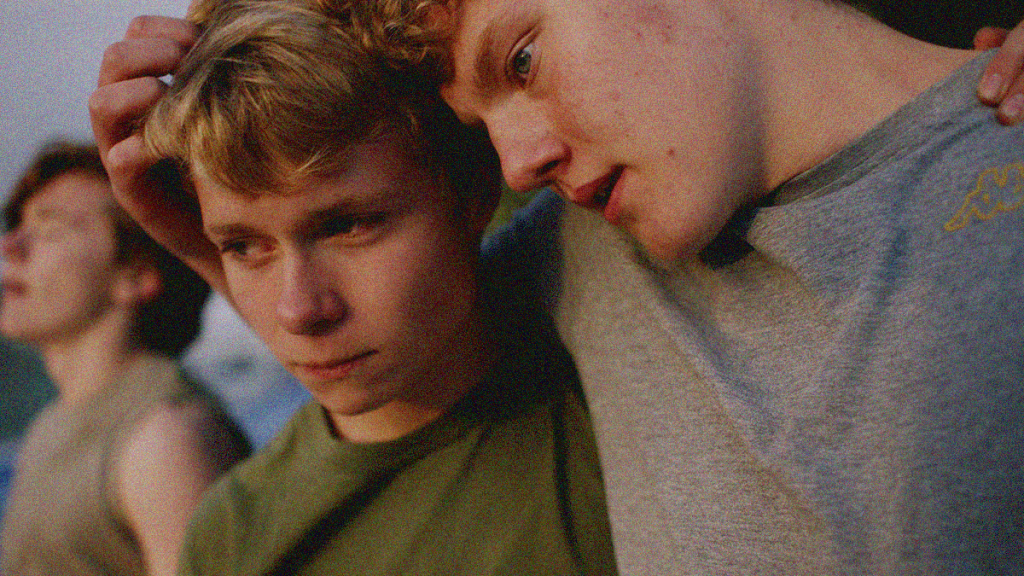
And that’s where Guðmundsson takes an unexpected turn into the supernatural. Similar to his clairvoyant mother, Addi is haunted by visions and feelings that push him to be ready to make impossible choices. It’s both a narrative impulse to add intrigue and a metaphoric symbol for the sensitivity that runs throughout the film’s central friendship despite the toxically masculine overtones. That vulnerability and fear keeps even Konni grounded—at once ready to pummel someone bigger than him for the most forgettable slight and quick to lay his head in Addi’s lap for the comfort he’s never received at home.
It all adds up to a seminal moment in their lives that’s born from their proactive rage and protective spirit. The kind of event that feels like it’s going to be the thing that binds them together forever only to prove their undoing with each looking at himself in the mirror during the aftermath to decide what path they truly wish to follow moving forward. Justice is served. Mistakes are made. Thresholds are crossed that do not possess a way back through.
The result is an intensely dramatic coming-of-age tale full of the dark secrets that lie in the shadows of a lower income neighborhood populated by teenagers who have yet to gain a foothold in the world. It’s a story about the power of friendship and the reality that its strength can be both solid enough to move mountains and too volatile to last.
Birgir Dagur Bjarkason and Viktor Benóný Benediktsson in BEAUTIFUL BEINGS; courtesy of Altered Innocence.
 jaredmobarak.com
Leave a comment