
Rating: NR | Runtime: 143 minutes
Release Date: October 9th, 1952 (Japan) / March 25th, 1956 (USA)
Studio: Toho / Brandon Films
Director(s): Akira Kurosawa
Writer(s): Akira Kurosawa, Shinobu Hashimoto & Hideo Oguni
How tragic that man can never realize how beautiful life is until he is face to face with death.
Leave it to a remake to finally get me to watch an Akira Kurosawa film at age forty. Yeah, yeah. Cinephile jail and all that. While Bill Nighy’s Oscar chances via Living probably shouldn’t have dictated my introduction into the legendary director’s expansive catalog, Ikiru being my first experience didn’t disappoint.
Because beyond the acting and the story (co-written alongside Shinobu Hashimoto and Hideo Oguni with loose inspiration from Leo Tolstoy’s The Death of Ivan llych) is the magnificent mise-en-scène. I’m talking next level blocking wherein no faces are ever covered and every head in frame (even through reflection) is crucial to that specific moment. And then there’s the constant use of “walls” blocking Kanji Watanabe (Takashi Shimura) from the rest of the world until he so ardently bursts through his office door at the end of act two. Nothing is accidental.
It can’t be. Watanabe doesn’t have time for superfluity or confusion—not when he only has six months to live. Not when he’s desperate to find meaning in what few days he has left. He wants it to be with his son Mitsuo (Nobuo Kaneko), but that ship has sailed due to a deep-seated resentment neither man knew existed until the moment to be vulnerable and honest forces them to raise their defenses and push each other away further.
He thought it could be booze (he’d never bought himself a drink until after discovering he had stomach cancer, rendering it into poison), gambling, and excitement, but he simply doesn’t have the stamina to comply. So, he latches onto an employee (Miki Odagiri’s Toyo) in the hopes her joie de vivre might rub off on him. Except, of course, that truly living isn’t external. Watanabe just needs to find something he can be passionate about on his own terms.
It’s the simplicity of the message and the avenue with which he finds it that resonates because it was right there in front of him the whole time. Where this type of story often tries to complicate things by twisting itself into pretzels for a reconciliation between father and son or an It’s a Wonderful Life-esque look into everything Watanabe has forgotten he was, Kurosawa and company allow hard truths to stand.
He won’t find common ground with his son. It’s not wholly his fault (he was dealt a rough hand with the early passing of his wife while Mitsuo reciprocates his pragmatism regardless of whether it was learned or constructed), but it is his reality. So too is the fact that Watanabe lived a mostly forgettable life as a mummy wasting every minute as a slave to bureaucratic inefficiency.
It’s only right then that his last gasp push to make his mark and understand what life could have brought him if only he’d opened his eyes earlier is busting through the governmental red tape he helped affix. There are piles and piles of papers on his desk that he’s stamped and transferred to other departments so they too could stamp and transfer them again (Douglas Adams must have seen the fantastic opening sequence of mothers trying in vain to clean-up sewage in their neighborhood before writing The Hitchhiker’s Guide to the Galaxy).
All he must do is pick one of those proposals up and spearhead its fruition himself to lend his job the purpose it was supposed to have before politics (not government) ruined progress. As Toyo knows, doing something that makes you feel good even though it’s difficult and draining makes all the difference.
And with a stroke of genius, Ikiru shows us the spoils through the drunken accounts of those who were so lost in the same doldrums that they didn’t even realize what they were witnessing. It’s a rousing mechanic that augments the comedic elements running throughout the film while also reinforcing the overall message stating that we have the power to change our lives if only we find the courage and determination to follow through when no one else will.
Because there is an epiphany that occurs. The men who worked alongside Watanabe for thirty years do recognize the lesson he learned without having to receive their own fatal prognosis. Unfortunately, that passion is drilled out of us at a young age due to an education system preparing us to do our part for the economy rather than teaching us how to save humanity. We champion heroes so easily because we’re too beaten down to acknowledge we wouldn’t need them at all if we only worked together to create rather than indefinitely stall.


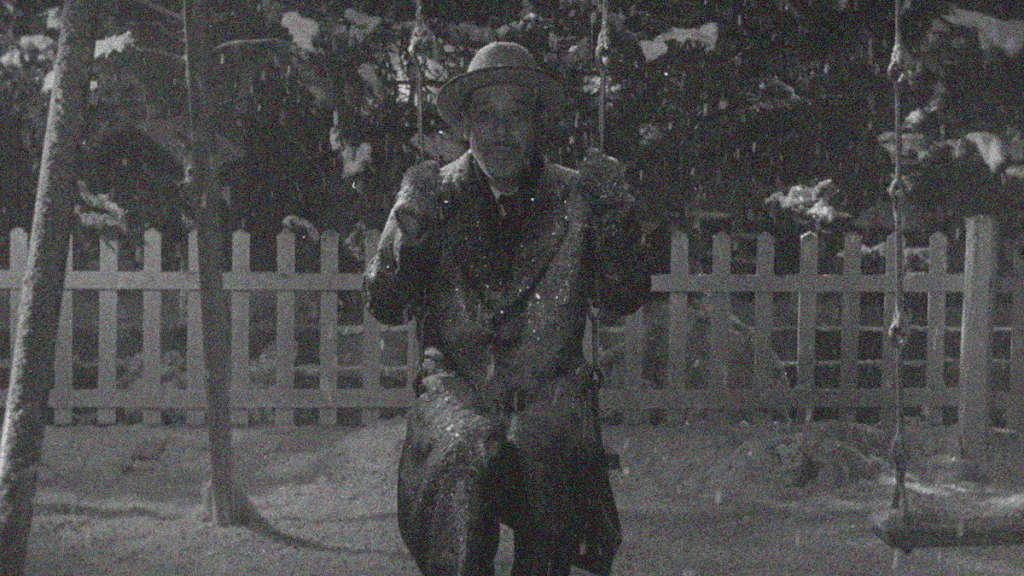
Takashi Shimura in IKIRU. Courtesy of Janus Films.




 jaredmobarak.com
Leave a comment