
Rating: NR | Runtime: 114 minutes
Release Date: July 7th, 2022 (Austria) / December 23rd, 2022 (USA)
Studio: Panda Lichtspiele Filmverleih / IFC Films
Director(s): Marie Kreutzer
Writer(s): Marie Kreutzer
And we love anybody that loves in us that which we would like to be.
Judd Apatow jokes aside, Marie Kreutzer’s Corsage could have easily been titled This Is 40. Empress Elisabeth of Austria (the always wonderful Vicky Krieps, who tied for best performance at Cannes and should be a dark horse candidate for an Oscar nomination if the Academy was more willing to watch foreign films) has just celebrated her milestone birthday on Christmas Eve 1877 and everything has changed as a result. Suddenly transformed into fodder for tabloids with topics like weight, health, and adultery, she wants more than the life she’s led as a silent figure by her husband’s side. What had been a dream now felt like a prison.
The film unfolds during a course of a year as depression, listlessness, and rebellion alternatively take hold of Elisabeth. She wants to be free. She wants to be useful. She wants to laugh without having to wonder how her court or subjects interpret that laughter. Because having fun with her riding instructor is “unseemly.” Wanting to spend time with her children alone by sneaking off with them in the night is “reckless.” She laments that her entire purpose is to braid her hair and stand by her husband’s side with a smile because it’s the truth. To want more is to be labeled insolent.
It’s a tragic series of vignettes that at first seem as though Elisabeth is a vain empress who simply seeks the adulation of her youth by leading every conversation to a place where she might be complimented (even in an insane asylum). But the psychology is much more complex. That flattery was how she knew she was doing her job correctly. Existing as a woman in a monarchy ruled by the patriarchy, her sole purpose was to be admired. So, once the world stops (or shifts tone from earnestness to obligation), she opens her eyes to wanting more. Unsatisfied by the status quo, she seeks pleasure and in turn feeds the fickle fire that is her dissolving reputation in the minds of her detractors.
The parallels to today’s misogyny are obvious (the asylum director’s commentary on the women in his care is as reductive and cruel as you can imagine) and Elisabeth’s steadfast determination to be heard as deafening with a disgruntled look as it is with a fist pounding on the table. Krieps is as captivating in the dramatic moments as she is in the comedic ones—suicidal tendencies, dereliction of duty, and obscene gestures (flipping the bird to a dining room of dignitaries) alike.
Kreutzer also leans into the freedom of fictionalization to distill Elisabeth’s awakening into meticulously structured, month-long chapters while introducing anachronistic details like The Rolling Stones’ “As Tears Go By” being played on a harp. It’s a lively enterprise that goes beyond historical fact to capture a prevailing attitude instead. It’s not about what Elisabeth did, but why she had no choice but to do it.
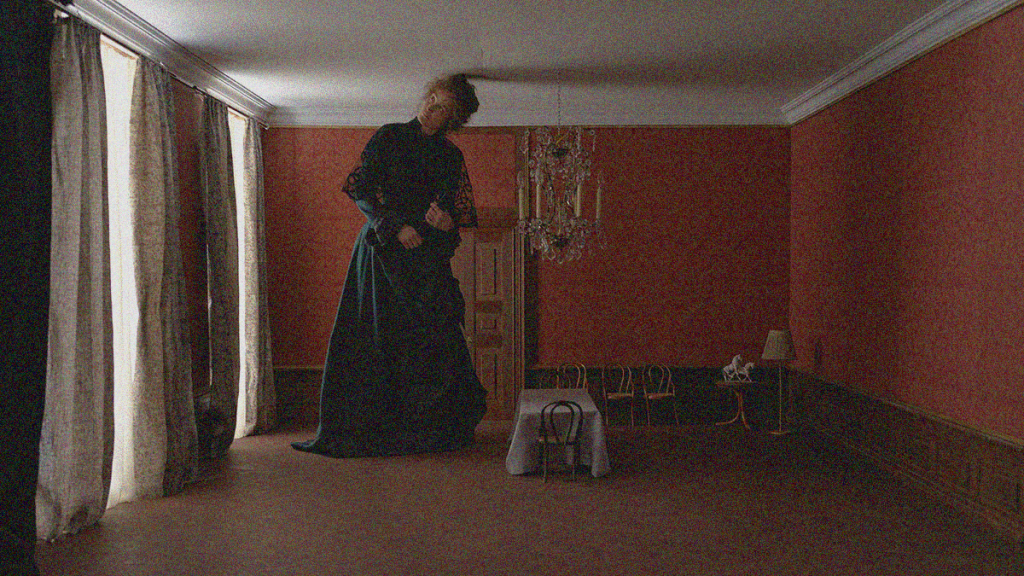
Vicky Krieps as “Empress Elisabeth of Austria” in Marie Kreutzer’s CORSAGE. Courtesy of Robert M. Brandstaetter. An IFC Films Release.



 jaredmobarak.com
Leave a comment