
Rating: PG | Runtime: 80 minutes
Release Date: June 16th, 2010 (France) / December 25th, 2010 (USA)
Studio: Pathé / Sony Pictures Classics
Director(s): Sylvain Chomet
Writer(s): Sylvain Chomet / Jacques Tati (unproduced script)
Magicians don’t exist.
There are three names in animation today: Pixar, Miyazaki, and Sylvain Chomet. The first is a major branch of Disney and the second is a Japanese anime staple (often making its way stateside with help from the Mouse House). The Frenchman Chomet could be the most intriguing and quite possibly the best of the group. With only two feature length films to his name—and a live action segment in Paris, je t’aime, disappointing only because it wasn’t animated—too much praise may be premature. But if you saw Les triplettes de Belleville or his newest L’illusionniste, you’ll understand why the risk should be taken.
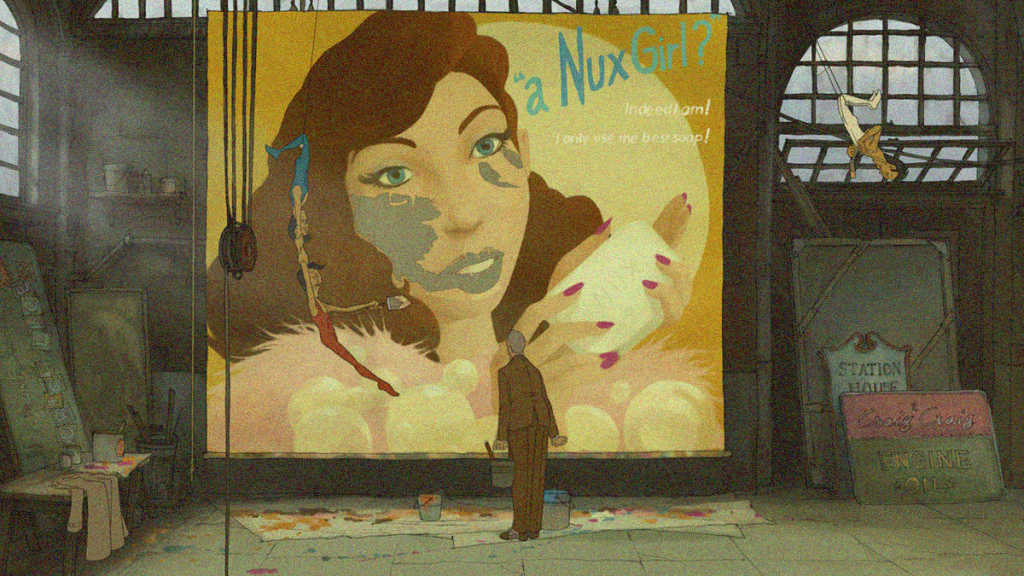
His style is like nothing else out there. A hyper real world inhabited by human figures utilizing caricatured attributes to push the aesthetic towards humorous fantasy. Couple the signature look with an almost complete lack of language (save for a few common words mixed in with garbled or foreign mumbling uninterested in translation), and you’re given a world of magic for all ages.
Maybe that’s a bit misleading as the subject matter could easily go over the head of children, but the muted colors and humor transcend language and age to be understood visually and emotionally even if the finer points of the story may be lost. The sheer fact Chomet took an unproduced script from auteur Jacques Tati to adapt his tale of an illusionist traveling through Europe to find work shows his skill at taking a medium usually reserved for the kids and making it relevant to true cinema lovers.
There are no fluffy animals breaking out in song or huge round and protruding eyes welling with tears to tug at heartstrings. Besides the gentleman behind me—obviously dragged to a film he and his wife had no clue about (her asking “Honey, is this some form of animation?” as he sighed heavily to prove the point of his boredom and utter lack of giving it a chance)—I don’t see how anyone looking to be captivated by a world and touched by its characters could be disappointed.
L’illusionniste isn’t an easy film, though. Set in the late 1950s with Cold War allusions portrayed through newspaper headlines on the street, there are definitely underlying themes at play. The most important is the belief in helping our fellow man at their time of need. The main character is unwanted in France due to lackluster attendance and appreciation for his illusions and a quick stop to London only shows the changing tide of the world.
His art is fast becoming a dying act from a generation overtaken by a surge of rock bands and screaming girl fandom—expressed by a crazy band called The Britons who writh on the floor with guitars, play up their machismo for hoards of fawning girls, and skip and prance effeminately backstage when the curtain is drawn. I smell a bit of a French shot towards the Brits here (a little “class” versus “crass”), but the point of this blatant change in the tide of entertainment is made. If not for a drunkard Scot loving a performance and bringing him home, this magician might have given up.
But even Scotland has moved on. The small bar patrons eat the act up, but it doesn’t take long for new electricity to power a jukebox and render our illusionist obsolete. Adults just don’t want to see magic anymore and only little Alice, the girl who cleans up the lodgings above the bar, sees the spark his show creates. She is so captivated by his craft that she decides to join him on his journey, assuming they will want for nothing and he will create whatever they need to survive.
He takes her under his wing like a daughter, buying her gifts and giving them to her in fun, sleight-of-hand ways, adding to her belief in his powers. While she stays in the room, meets the other performers in their Edinburgh lodging (a ventriloquist, a trio of athletic gymnasts, and a down on his luck clown who appears to be the poster child for hobos), and traipses through the city with her new coat, shoes, and confidence, The Illusionist does what he can to pay their way.
His agent gets him a stage with minimal customers. An ad for mechanic help gives him an opportunity for extra cash. And the cold hard truth of either selling out or giving up weighs heavily on his soul. The fact he keeps going and doing what he can to support this girl becomes the touching backdrop to a tale that could be looked upon as a tragedy. The film’s title soon shows itself to be less about the lead’s act and more about the illusion he cultivates to help Alice turn from a poor, sad little girl to the naïve yet compassionate young woman who looks and dresses like a member of high society.
It’s through his demise that she rises. His sacrifice allows her to make something of herself. As a result, every character progresses towards a bittersweet conclusion steeped in faith or its loss. Humor abounds—especially with the supporting characters coming in and out of the more stoic illusionist’s life—with his bite-crazy rabbit in the hat even joining the fun. But when all is said and done, the emotions, bonds formed, and sacrifices made are what resonate. Chomet knows they’re what will hit us hard and that they’ll do so without a need for words.
Also, kudos to the director for a brilliant sequence at the ‘Cameo’ Theatre with a screening of Tati’s Mon Oncle. It’s a great way to pay homage to the writer as well as his character Monsieur Hulot, an obvious inspiration.

Nominee:
Animated Feature
The Illusionist in THE ILLUSIONIST, directed by Sylvain Chomet © 2010 Django Films Illusionist Ltd / Cine B / France 3 Cinema, Courtesy of Sony Pictures Classics.



 jaredmobarak.com
Leave a comment