
Rating: R | Runtime: 112 minutes
Release Date: December 29th, 2010 (USA)
Studio: The Weinstein Company
Director(s): Derek Cianfrance
Writer(s): Derek Cianfrance & Joey Curtis and Cami Delavigne
How can you trust your feelings when they can just disappear like that?
Twelve years between feature dramatic films for writer/director Derek Cianfrance is excusable when they end up as good as Blue Valentine. Billed as a love story, this look into a young NYC couple’s relationship excels because it shows the bad times with as much authenticity as the good.
After gaining buzz in 1998 for his debut Brother Tied, Cianfrance spent the next decade honing this script and making its stunning portrayal of companionship strong enough to see the light of day. Making documentaries to pay the bills and survive while his art gestated, things finally came together with A-list talent Ryan Gosling and Michelle Williams signed on to breathe life into the already complex characters on the page. Shot with way too little money and way too few days, I’d almost hate to see what he could do with a big budget and time. In a perfect world, all films would have the script and performances to make brilliantly complex work that hits you like a punch to the gut. It’ll be a travesty if this doesn’t get a Best Picture Oscar nomination to go along with almost guaranteed acting notices come February.
The end is in the beginning. It sucks to think about, but I’m sure everyone has looked back on a failed relationship by tracing its breakdown to details that occurred very early. Things you once loved become things you hate years later as the partnership evolves together as well as separately. We continually change, altering our interests, reworking our sensibilities, and becoming completely different people with each passing second. So, how can we expect to not realize at some point that the person we decided to spend the rest of our lives with may no longer be the one?
I’m not saying ‘true love’ or whatever other romantic notion you may believe in doesn’t exist. I’d go so far as saying Cianfrance, along with co-writers Cami Delavigne and Joey Curtis, isn’t saying that either, but we can’t go along with the naïve notion that things won’t be hard. There will always be memories of the past and moments of déjà vu where you smile bittersweetly about a happier time, knowing the same situation now only harbors sorrow. So, like any good storyteller would, Cianfrance latches onto this convention and tells his story by cross-cutting the finish with its start.
Little Frankie—the young Faith Wladyka, in her first role—introduces us to the story, screaming the name of the family dog that’s disappeared. Crawling through the doggie door, she enters a messy living room with her father passed out and covered in paint on a chair. Gosling’s Dean has the air of white trash with his large glasses, unkempt receding hairline, and precariously hanging unlit cigarette in mouth as he carries his daughter out to see the unlocked fence. His wife, Williams’s Cindy, is catching some extra sleep before her shift as a physician’s assistant, angry when woken up by her two children—yes, I lump her husband into the pair—pretending to be tigers.
Life is obviously a struggle as Dean drinks before work at 8am and Cindy thoughtlessly ignores her daughter’s disgust for breakfast—a condition agreed upon by her father once he realizes her oatmeal was simply poured in a bowl with water. Frankie is definitely Daddy’s little girl thanks to his penchant for acting her age and you start to see a subtle feeling of annoyed envy on Cindy’s part as a result. Whatever unbridled love existed is now merely a shadow.
That love did exist, though. No one can deny this fact. Soon the film transports us to the day the two met: her dropping her mother off at a nursing home and him working to move a new resident in. Cindy suddenly has a broad smile and positive attitude with her long blonde hair and life as a college student while Dean has a full head of hair, leather jacket, and surprisingly compassionate and romantic view on life and love to contrast his rough accent and superficially uncultured persona.
They are young with fate and desire helping to get them together for one of the sweetest first dates I can remember seeing onscreen. There’s a genuine spark despite her dealing with recent relationship woes and him wondering if the dream of finding a girl ‘he’d be stupid to walk away from’ wasn’t in the cards. They’re a fascinating duo as Dean’s jokes about not being good enough for her stay affable enough to charm rather than annoy while her identity proves to be more than just beauty through an educational pursuit in medicine. They’re from different parts of town, but click from a shared yearning for something real.
A wonderful ukulele performance becomes a highlight of Blue Valentine, shot from a city street with Williams dancing on a storefront’s stoop as Gosling goofily croons and strums. It is the benchmark moment for them as a couple—cementing a bond you’d think would be impenetrable until we’re exposed to the hidden secrets of their courtship. And because the present-day scenes are a lifetime apart from those early days, Cianfrance knew portraying that distance in time was crucial. He actually shut down production for a month so his stars could live together and cultivate a familiarity to subsequently dismantle on-screen.
It’s amazing to watch the feelings come and go as we switch time periods with the use of ‘their song’—on the same CD five or so years later—creating a love like no other in one frame and the hurtful memories of happier times the next to exemplify their change in feelings. Gosling and Williams will make you cry from joy and pain through their performances, serving as vessels for us to project our own similar situations upon. This is life in all its unfiltered glory and the ending, with its quick cuts from their wedding day to the point of no return (all set to a score by Grizzly Bear) is heart-wrenchingly perfect.
As a note: it was only when I started writing that I remembered the controversial NC-17 rating first given by the MPAA. That’s how inappropriate the label was. It’s a shame we’ve become a culture where positive, healthy love becomes taboo while beheadings and dismemberments are deemed acceptable for teenagers. Thankfully, it was overturned to an R so more people will watch as a result. It deserves to be seen.

Nominee:
Lead Actress
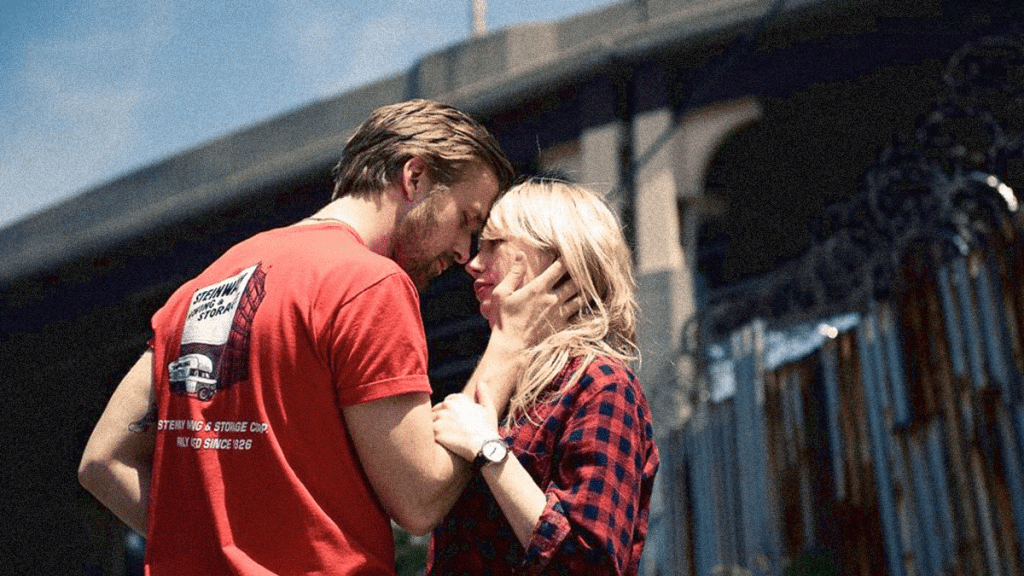
Ryan Gosling as Dean and Michelle Williams as Cindy in Derek Cianfrance’s BLUE VALENTINE. Photo Credit Davi Russo/ The Weinstein Company.




 jaredmobarak.com
Leave a comment