
Rating: R | Runtime: 99 minutes
Release Date: May 2nd, 2008 (USA)
Studio: Sony Pictures Classics
Director(s): David Mamet
Writer(s): David Mamet
There’s always an escape.
David Mamet is back with new film Redbelt. After four years away from Hollywood, producing the television show “The Unit”, Mamet has followed up his solid thriller Spartan with a drama of intelligence that only he can capture. Complete with his trademarked, metered language—every word timed and delivered with precision—this tale may be billed as a mixed martial arts actioner, but proves so much more.
The sport itself lends heavily to the plot, but, rather than with its moves and choreography, it’s the underlying sense of honor that becomes the central focus. Beginning as a straight-forward drama of faith and morality before culminating into what appears to be a Jiu-Jitsu instructor’s big chance at success and wealth to keep his fledgling gym in business, Mamet’s story soon has the rug pulled out from under it.
I will admit I didn’t expect the sharp turn of events halfway through as everything Mike Terry built his life upon leads him to being on the edge of throwing everything he believes away forever. A film of respect and sacrifice, greed and deceit, Redbelt goes places you will not be ready for yet is handled deftly so all the machinations fall into place to show their true worth to the progression of the story. It all happens for a reason. Life sometimes deals you pain and leaves you in a choke hold about to lose air, but, as Terry tells his students, there’s always an escape.
I don’t want to ruin anything since it caught me so off-guard. Maybe the turn was hinted in the trailer—I don’t remember—but it is better to go in blind and follow the plot threads to watch it all unravel. With that said, I do have a problem with the ending. Not so much the tone or result, but how it transpires. Because I do believe it’s a perfect conclusion. It’s just played too easily without explaining the motivations behind two Jiu-Jitsu champions and their actions.
To do what they do would mean they knew what was going on with the tournament and what Terry was about to tell the world even before he spoke. I just don’t see how that can be true. Maybe Mamet wanted to stick to a minimalist approach and allow it all to occur in sequence—and it is a powerful progression—but I wonder if that one problem could have been rectified. Maybe it was and I simply missed it. I don’t want to accuse the filmmaker of a plot-hole if he actually did cover it up, I just can’t recall seeing it. It’s the one blight on an otherwise stellar film.
The script is a huge part of the success and is where Mamet either flourishes or fails. At times he can be too cute or overwrought, but other instances put him at the top of the industry. I generally find his smaller works based on his plays prove to be his best work, but this one is definitely on par. The ability to take us on this journey with two halves of good times and the fall from them is a feat that usually fails due to contrivances and blatant tells. Maybe I was tired or just too caught up in the acting and fight sequences, but it really surprised me in a good way.
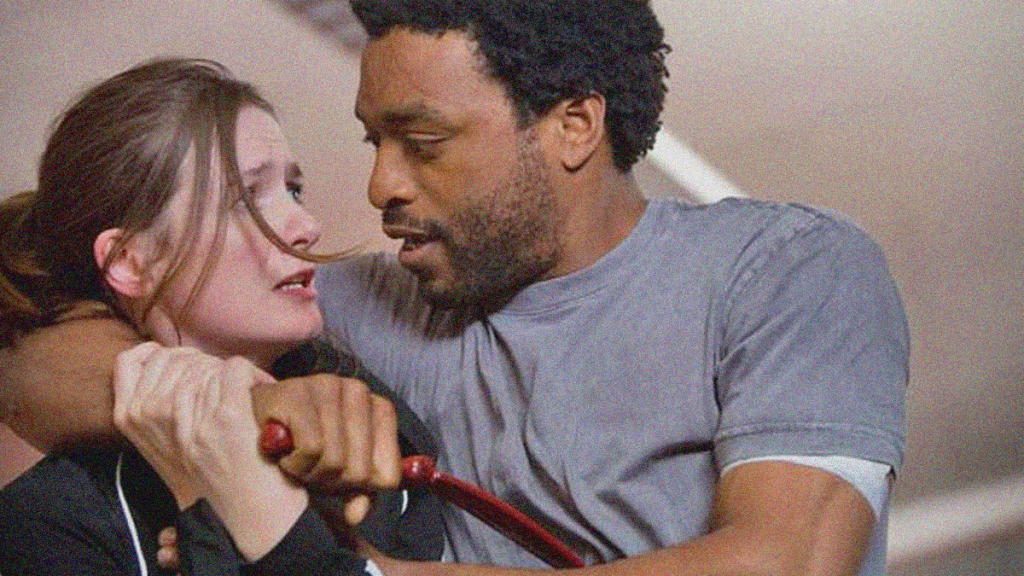
Credit should go to the performers too for keeping their end of the game high quality. You believe everyone involved as much as Mike Terry does. So, when it hits him, the revelation proves astounding. I believe that’s due to the brilliant turn from Chiwetel Ejiofor in the lead role. He apparently never had any formal martial arts training beforehand, but it doesn’t show when he fully encompass Terry. He really pulls off the realism, energy, and stoicism of being in control at all times. Eijiofor carries the film on his back as he enters the world of Hollywood business and behind-closed-door deals before attempting to claw his way out. Despite the opportunity presented, he never falters from the passion he has in the sport and the willingness to help anyone in need. A true hero, Mike Terry continues on a path of righteousness, pushing the anger away and clearing his mind to prevail.
The rest of the cast—consisting of many Mamet regulars like wife Rebecca Pidgeon, David Paymer, and Ricky Jay in small roles—takes the words and nails every reading. Max Martini stands out as Terry’s star pupil and emotional backbone to the story. Alice Braga is good as the wife discovering how standing by her man may not be the way to succeed financially in life. Emily Mortimer is fantastic as the troubled attorney whose accidental introduction to the gym puts everything into motion. And Tim Allen shows that he might still have some good serious turns in him if he can get time off from children’s fare. Along with the acting comes some amazing fight choreography too. The camera usually stays in close-up, but there aren’t too many sharp cuts to prevent the fights from playing out realistically. Sure we get the one man fighting a gang and winning, but he’s never left unscathed.
So, in conclusion, don’t hear all the martial arts noise and think Mamet has gone off the deep-end. Redbelt is first and foremost a David Mamet film that’s steeped in dialogue, quieter moments, and orchestrated sequences ensuring all the pieces are placed exactly where he wants them. Entertaining throughout, the film delivers on the promise of multiple genres and brings his writing back into our consciousness to realize he hasn’t thrown the towel in yet.
Left: Emily Moriter as Laura Black. Right: Chiwetel Ejiofor as Mike Terry. Photo by Lorey Sebastian, © The Redbelt Company, LLC, courtesy Sony Pictures Classics. All Rights Reserved.



 jaredmobarak.com
Leave a comment