
Rating: PG-13 | Runtime: 149 minutes
Release Date: May 19th, 2006 (USA)
Studio: Columbia Pictures / Sony Pictures Releasing
Director(s): Ron Howard
Writer(s): Akiva Goldsman / Dan Brown (novel)
O’ Draconian Devil
I can finally cross The Da Vinci Code off my watchlist. While I thoroughly enjoyed the novel, I was on the fence when the prospect of going to the theater came up. In the end I realized it needed to be seen on the big screen and I’m glad that was my decision. It of course paled in comparison to the book, but all in all was still a successful adaptation that stayed true for its entirety. Unfortunately, it staying so true to the book is why it wasn’t more.
I give full credit to the actors as each did their role justice—even Tom Hanks as our hero Robert Langdon, the one character I went in thinking wasn’t perfectly cast. Jean Reno and Ian McKellen were brilliant as Captain Fache and Sir Teabing, respectively. Audrey Tautou and Alfred Molina brought credibility to their parts. And Paul Bettany encompassed the albino Silas perfectly. Bettany truly stole the show and it’s a shame many of his scenes were cut in the adaptation process to make him more villain than misguided, lost soul.
I am thankful, however, that the filmmakers made the Hanks/Tautou dynamic more of a friendship than the budding love affair it was in the book. The age gap of the actors was just too much to overcome and thinning that relationship made the characters more believable. Ron Howard made a good directorial choice in guiding his cast this way. It’s too bad he didn’t alter much else.
Howard fell into the Chris Columbus rut with The Da Vinci Code. As Columbus showed with his first two installments in the Harry Potter saga, staying word for word to the source material does not a great movie make. Text and film are two separate mediums that must be molded unto themselves for complete success. Howard seems to have been so preoccupied with pleasing the Dan Brown fanatics with a faithful adaptation that he forgot this movie was his baby to do with as he pleased.
Yes, the direction has some nice visual flair—evidenced with the fade from current action to past happenings, beautifully achieved on a crossing of the street towards the end where buses are going through swarms of walking pedestrians—but overall the text has been lifted to the screen more as a book on film then a piece of cinema. What this movie needed was a shot in the arm like how Alfonso Cuarón resurrected the Potter series with his entry. While still true to Prisoner of Azkaban‘s essence, Cuarón still put his stamp on the film by adding atmosphere and a visual sense of foreboding rather than falling back to the page.
Critics complained upon release that The Da Vinci Code preached rather than revealed and I must agree with them. It’s not that there’s more exposition in the movie than the novel, though. There’s actually less. Because of the need to shorten things to allow for a two-hour movie, scenes must be sacrificed. Too afraid to do any cutting, the filmmakers decided to condense instead. Whereas we are brought into the hunt while reading to listen to each character ruminate across multiple chapters as they slowly crack the newest puzzle, we’re given solutions on-screen directly after the question is asked.
This lack of methodical pacing makes it seem like we are being taught because we don’t get to be a part of the unraveling. So, while this isn’t a bad adaptation, perhaps the novel just wasn’t a great candidate for a cinematic conversion. Sometimes engrossing prose works because of its medium and unless a director comes in to capture that essence and create a film from it, we are left unsatisfied with a result that never truly takes form to stand on its own.
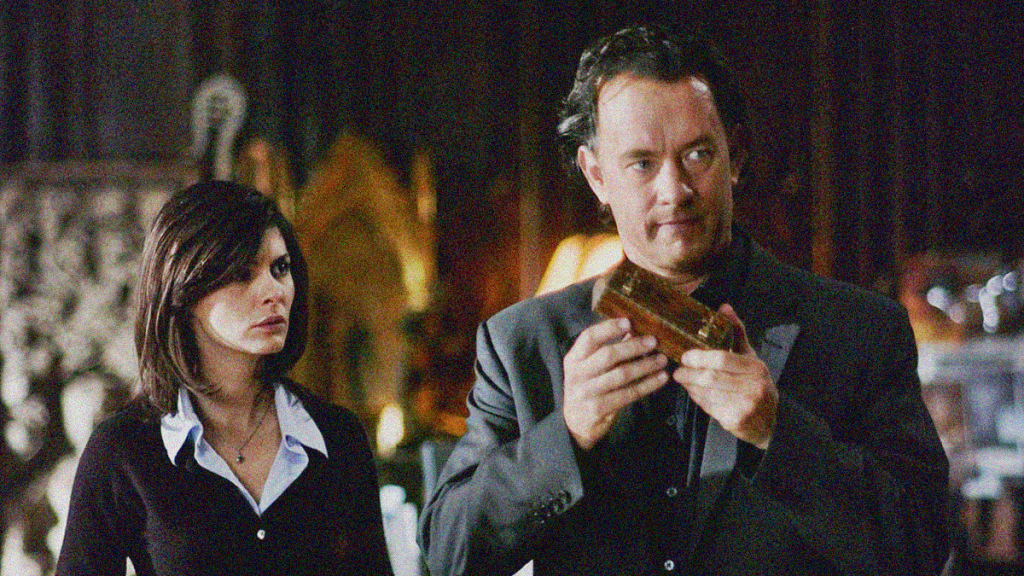
Audrey Tautou (Sophie Neveu) and Tom Hanks (Robert Langdon) in Columbia Pictures’ suspense thriller THE DA VINCI CODE.


 jaredmobarak.com
Leave a comment